



What Is PPS Charging?
 02 Jul,2026
PPS charging, short for Programmable Power Supply charging, is an advanced fast-charging technology under the USB Power Delivery standard. It allows a charger and a device to communicate in real time and adjust voltage and current dynamically during the charging process.
In simple terms, PPS charging is smarter than traditional fixed-voltage charging. Instead of sending power at only preset levels such as 5V, 9V, 15V, or 20V, a PPS charger can fine-tune its output according to the exact needs of the connected device. This helps improve charging efficiency, reduce heat, and protect battery health.
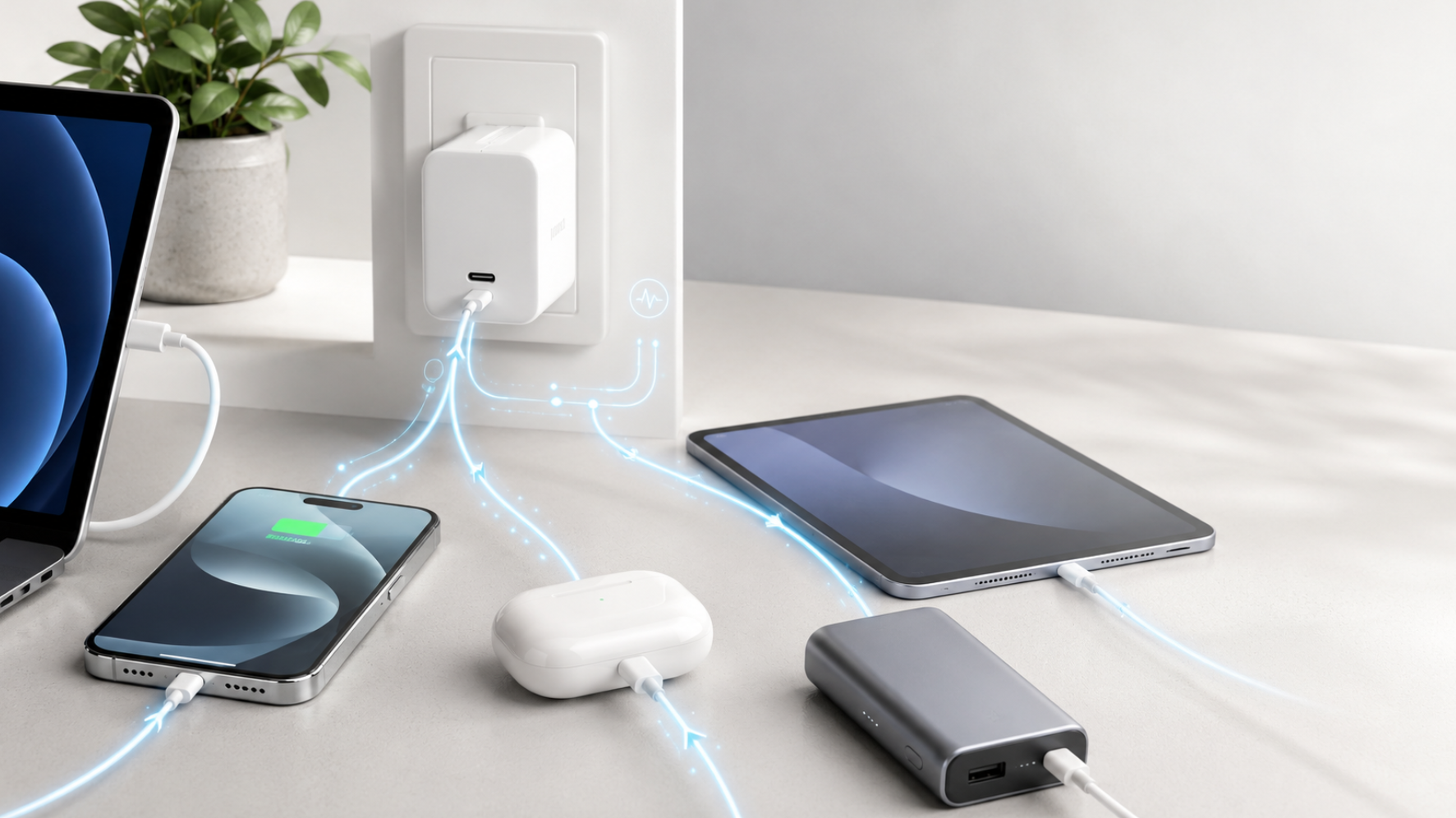
As smartphones, tablets, laptops, earbuds, power banks, and portable devices continue to use USB-C, PPS has become an important feature for brands, distributors, and buyers looking for high-quality charging solutions. For any professional USB Charger Manufacturer, supporting PPS is no longer just a technical upgrade. It is becoming a key requirement in the fast-charging market.
How Does PPS Charging Work?
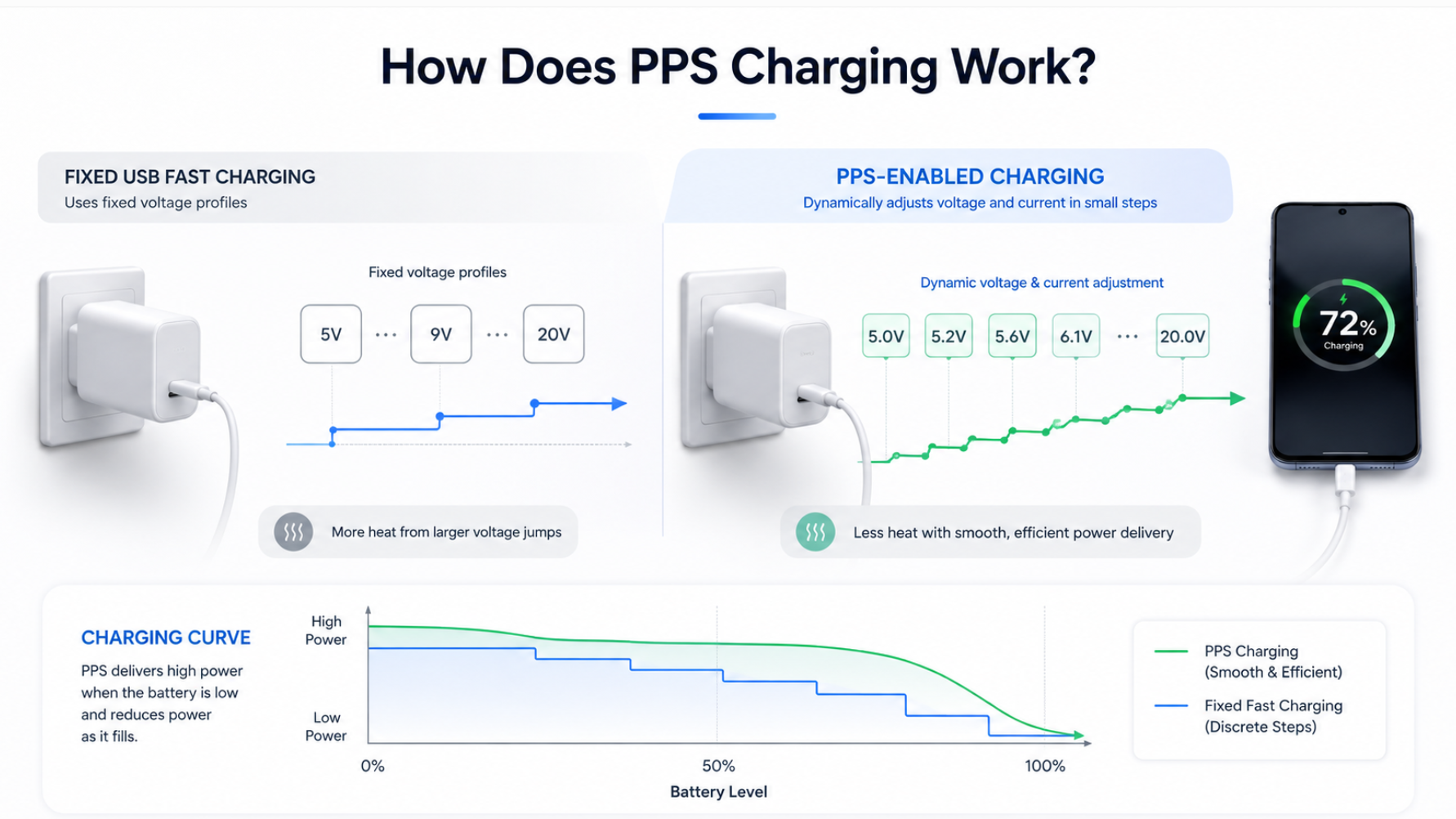
Traditional USB fast charging usually works through fixed power profiles. For example, a charger may offer 5V/3A, 9V/3A, or 20V/5A. The device chooses the closest available profile and charges at that level.
PPS works differently. A PPS-enabled device can request small adjustments in voltage and current from the charger while charging. According to USB Power Delivery technology, PPS can adjust voltage and current in very small steps, allowing the charger to deliver power more precisely.
This dynamic adjustment is especially useful because a battery does not need the same charging power from 0% to 100%. In the early stage, the battery may accept higher power. As it becomes fuller, the charging speed naturally slows down to reduce stress and heat. PPS helps manage this process more smoothly.
The result is a more efficient charging curve, better thermal control, and a more stable user experience.
PPS Charging vs. Standard USB PD Charging
USB Power Delivery, often called USB PD, is already a widely used fast-charging standard. It allows higher power output through USB-C and supports a wide range of devices, from phones to laptops.
However, standard USB PD mainly uses fixed voltage levels. PPS adds a more flexible layer on top of USB PD. It allows the charger to change its output in real time instead of staying at one fixed profile.
The difference can be explained simply:
Standard USB PD offers fixed power levels.
PPS charging offers adjustable power delivery.
This flexibility makes PPS particularly valuable for modern smartphones and high-performance portable devices. Some devices can only reach their best fast-charging speed when connected to a charger that supports PPS.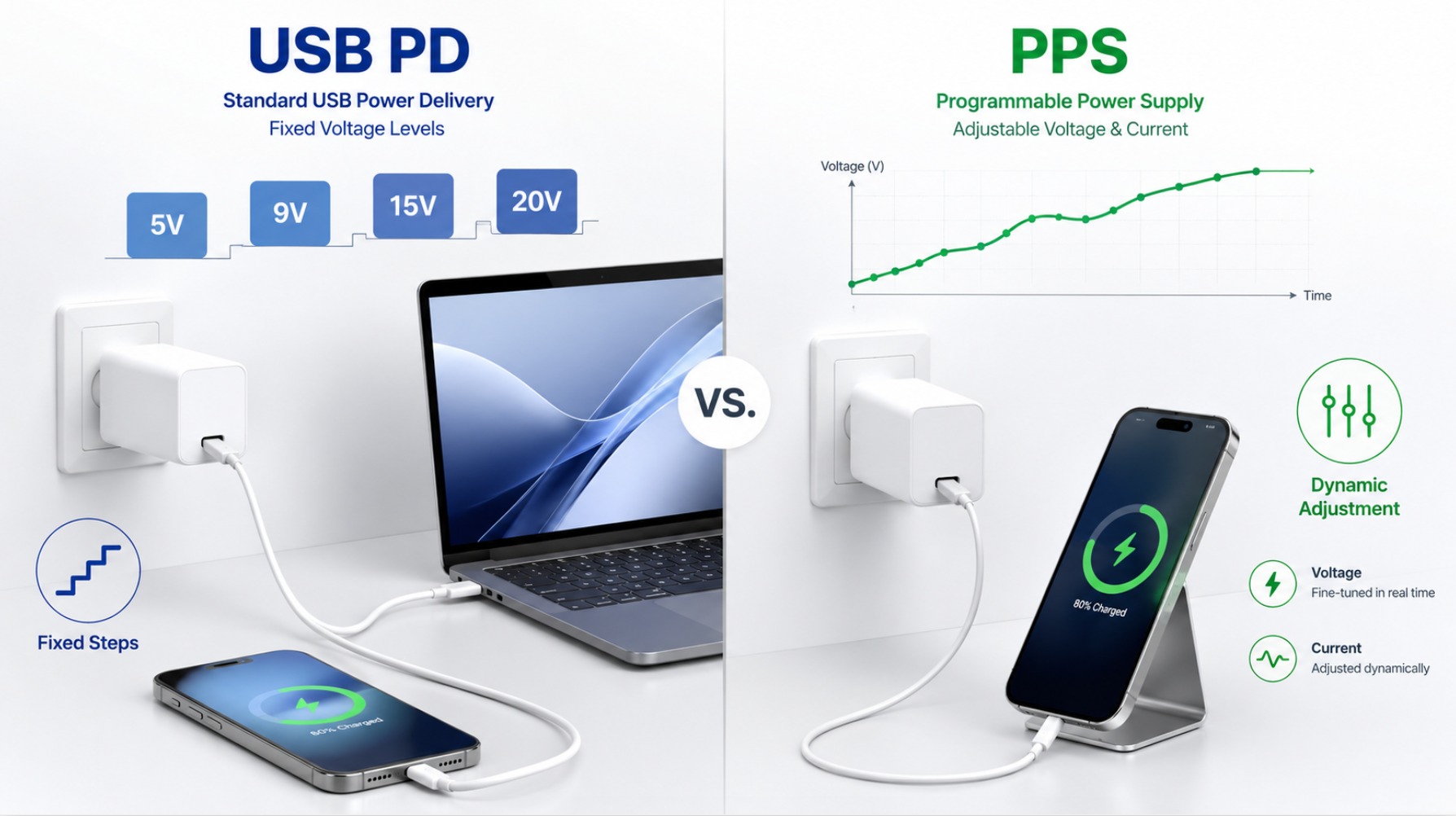
Why Is PPS Charging Important?
PPS charging matters because today’s users expect chargers to be fast, safe, compact, and compatible with multiple devices. A charger is no longer just a basic accessory. It is part of the full device experience.
For end users, PPS charging offers several benefits:
It can reduce charging heat.
It can improve charging efficiency.
It can support faster charging for compatible devices.
It can help protect long-term battery performance.
It can improve compatibility with newer USB-C devices.
For brands and distributors, PPS support can make a charger more competitive. When customers compare two USB-C chargers with similar wattage, the one with PPS often looks more advanced and future-ready.
This is one reason many buyers now ask their USB Charger Manufacturer whether a charger supports PD, PPS, GaN technology, and relevant safety certifications.
What Devices Support PPS Charging?
PPS charging is commonly used by many modern Android smartphones, especially models that support advanced fast charging through USB-C. Some tablets, power banks, and portable electronics also support PPS.
However, not every device requires PPS. For example, some laptops mainly rely on standard USB PD fixed voltage profiles. Some phones can charge through normal PD but need PPS to reach their highest charging speed.
This means compatibility is important. A good charger should support a wide range of protocols, including USB PD and PPS, while still working safely with devices that do not require PPS.
For buyers, this is where supplier selection becomes important. A reliable GaN Charger Supplier should not only provide high wattage, but also understand protocol design, safety protection, thermal management, certification requirements, and market compatibility.
PPS and GaN Chargers: Why They Work Well Together
PPS and GaN technology are often mentioned together, but they are not the same thing.
PPS is a charging protocol feature.
GaN, or gallium nitride, is a semiconductor material used to make chargers smaller, cooler, and more efficient.
When combined, PPS and GaN can create a strong charging solution. PPS helps the charger deliver power more precisely, while GaN helps improve power conversion efficiency and reduce the size of the charger.
This is especially useful for compact high-power chargers, such as 30W, 45W, 65W, 100W, and multi-port USB-C chargers. With GaN technology, manufacturers can design smaller chargers without sacrificing performance. With PPS, those chargers can better support modern fast-charging devices.
For brands selling in competitive markets, working with an experienced GaN Charger Supplier can help create products that are more attractive to consumers, especially in e-commerce, retail, and mobile accessory channels.
Is PPS Charging Safe?
Yes, PPS charging is designed with safety in mind, as long as the charger is properly engineered and certified. The charger and device communicate before and during charging. The device requests the power it needs, and the charger adjusts its output accordingly.
A quality PPS charger should also include multiple safety protections, such as:
Over-voltage protection
Over-current protection
Short-circuit protection
Over-temperature protection
Overload protection
Good thermal design
However, not all chargers are built to the same standard. Poor-quality chargers may claim fast charging but fail to deliver stable performance or safe temperature control. This is why brands should choose a professional USB Charger Manufacturer with experience in circuit design, quality testing, and international certification requirements.
What Should Buyers Consider When Choosing PPS Chargers?
When sourcing PPS chargers, wattage is only one part of the decision. Buyers should also evaluate protocol support, safety design, component quality, market certification, and supplier capability.
For example, a 65W USB-C charger may look attractive on paper, but buyers should check whether it supports PPS, what voltage and current ranges it offers, how power is distributed across ports, and whether it meets the target market’s certification standards.
For the European market, buyers usually need CE and related compliance documentation. For the United States, FCC and safety requirements are important. Other markets may require UKCA, PSE, KC, RCM, or other local certifications.
A reliable supplier should be able to provide clear specifications, test reports, packaging support, customization options, and stable production capacity.
Is PPS Charging Worth It?
For most modern USB-C charging products, PPS is worth considering. It improves compatibility with newer devices, supports better fast-charging performance, and makes the product more competitive in the market.
For consumers, PPS means smarter and more efficient charging. For distributors and brands, it means a stronger product selling point. For OEM and ODM projects, PPS support can help build a more future-ready product line.
As the USB-C ecosystem continues to grow, chargers with PD and PPS support will likely remain in strong demand. Whether you are developing a compact phone charger, a travel adapter, a desktop charger, or a multi-port GaN charger, PPS is a feature that can add real value.
Conclusion
PPS charging is an advanced fast-charging technology that allows a USB-C charger to adjust voltage and current dynamically based on the needs of the connected device. Compared with traditional fixed-voltage charging, PPS offers better efficiency, reduced heat, improved compatibility, and a smarter charging experience.
For brands, wholesalers, and distributors, PPS is an important feature to consider when selecting USB-C chargers. Working with the right USB Charger Manufacturer or GaN Charger Supplier can help ensure that your products meet market expectations, support the latest charging standards, and deliver safe, reliable performance to end users.
As fast charging continues to evolve, PPS will remain one of the key technologies shaping the future of USB-C power solutions.
 OEM vs ODM Chargers: What’s the Difference?