



Lenovo 150W Three-Port USB-C GaN Adapter (MCFX150A3) Review: A Commercial Flagship All-Rounder
 13 Oct,2026
Introduction: Why High-Power Commercial Charging Matters
High-power fast charging is now standard for premium business laptops. Yet GaN adapters at the same wattage vary widely.
Products generally fall into three tiers: entry-level cost-controlled models that only meet basic safety rules; consumer models with attractive paper specs but weaker sustained full-load stability; and high-end commercial models built to industrial-grade standards for electrical performance, environmental tolerance, and safety margin.
The Lenovo 150W three-port USB-C GaN adapter (MCFX150A3) belongs to the third tier. It is a flagship commercial fast charger aimed at government and enterprise offices, desktop multi-device users, and frequent business travelers. The unit uses a full GaN device set, giving it a hardware foundation for stable output under complex working conditions.
A Different Role in Lenovo’s Fast-Charging Lineup
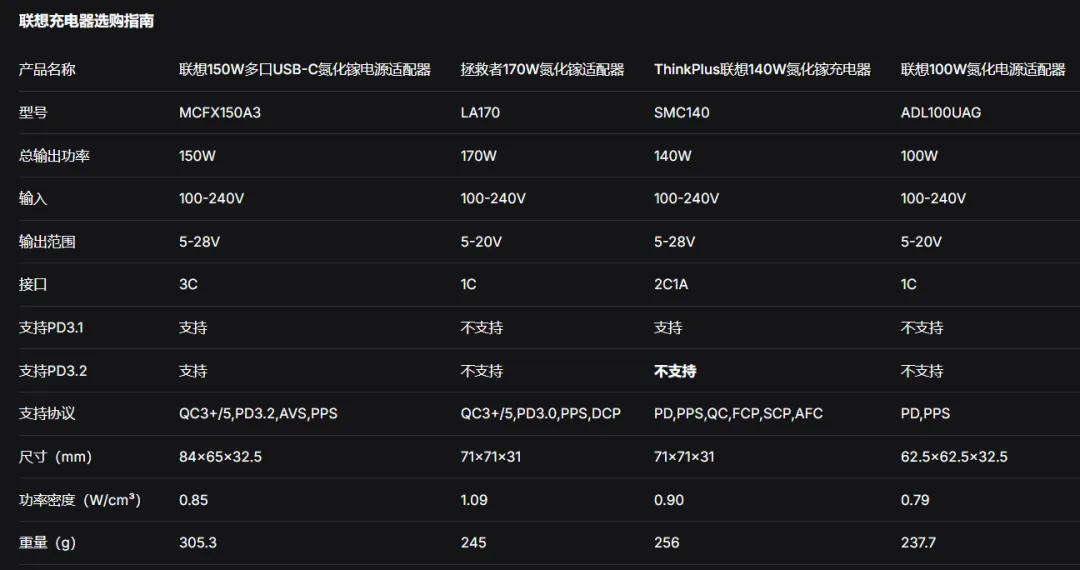
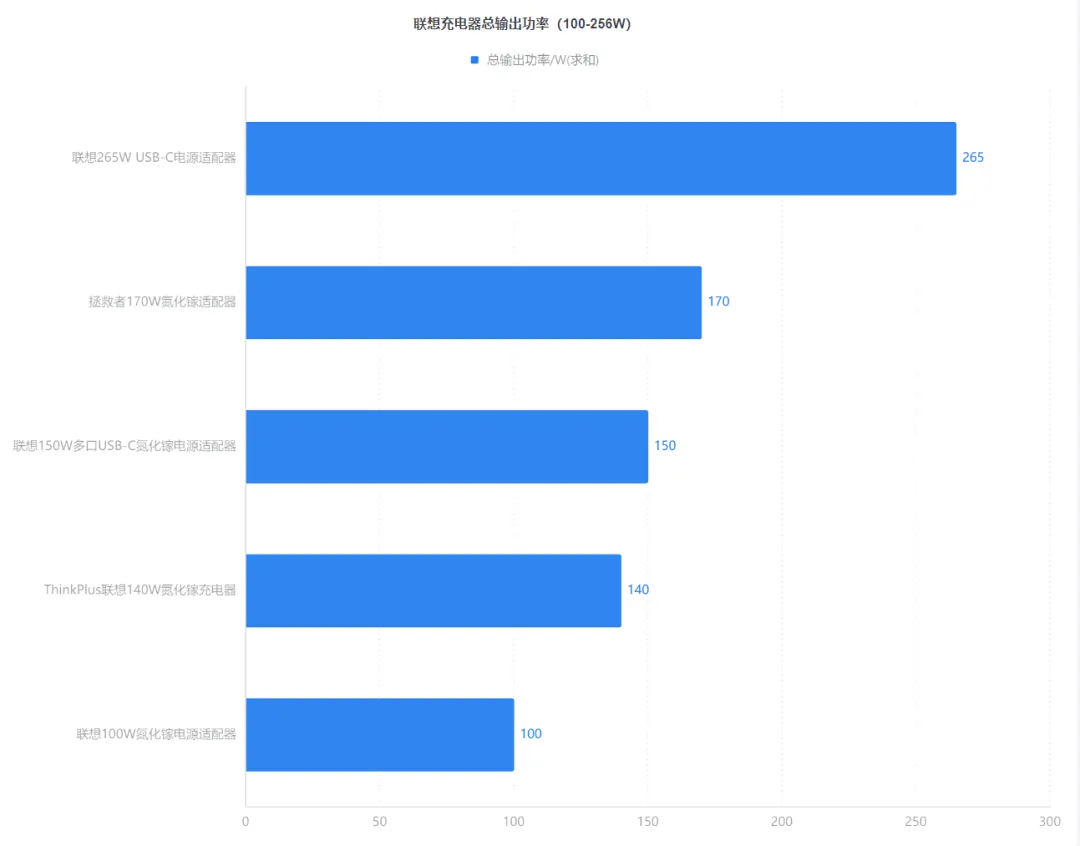
Lenovo already offers 100W single-port, 140W 2C1A, and Legion 170W single-port chargers. Those focus on one-device portability and one-to-one fast charging. The MCFX150A3 takes another route: three USB-C ports and 150W total output. It addresses users who carry a laptop, tablet, and multiple phones.
The design follows six commercial power requirements: peak load capability, EMI immunity, ultra-low leakage current, ESD protection, 5,000 m altitude adaptability, and wide-temperature tolerance. With GaN technology and intelligent dynamic power allocation, it can fast-charge two laptops and a phone at once, filling a gap in Lenovo’s desktop multi-device charging matrix.
Commercial-Grade Engineering: Six Hard Targets
The adapter is not a casual travel brick. It supports 1.5x rated peak power, so laptops under rendering or gaming loads do not suddenly drop power. It operates at altitudes up to 5,000 m, while ordinary chargers often stop at 2,000 m. Leakage current is ≤50 µA, reaching industrial control equipment safety levels.
ESD protection covers 8 kV contact and 15 kV air discharge. These features define its commercial character: stable, durable, and predictable over long periods.
Unboxing and Global Compliance
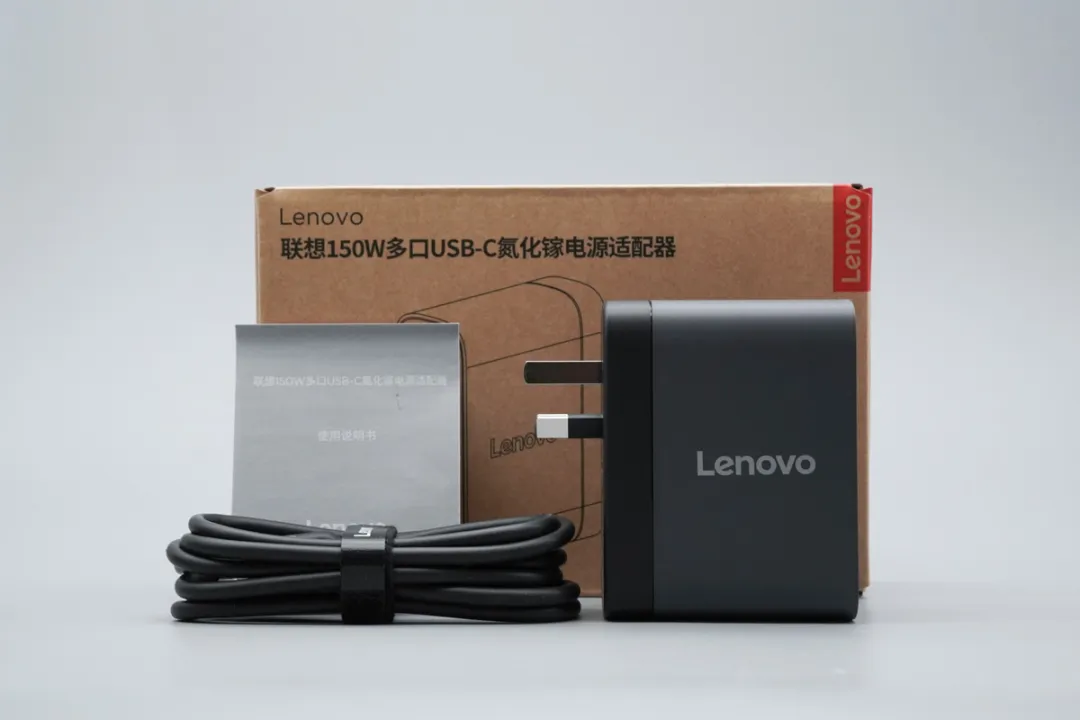
The adapter ships in a natural kraft paper box with a recyclable pulp tray and minimal printing. The low-redundancy packaging matches commercial design philosophy. The box lists strong fast charging, multiple protection, multi-device compatibility, palm-sized design, and strict standards.
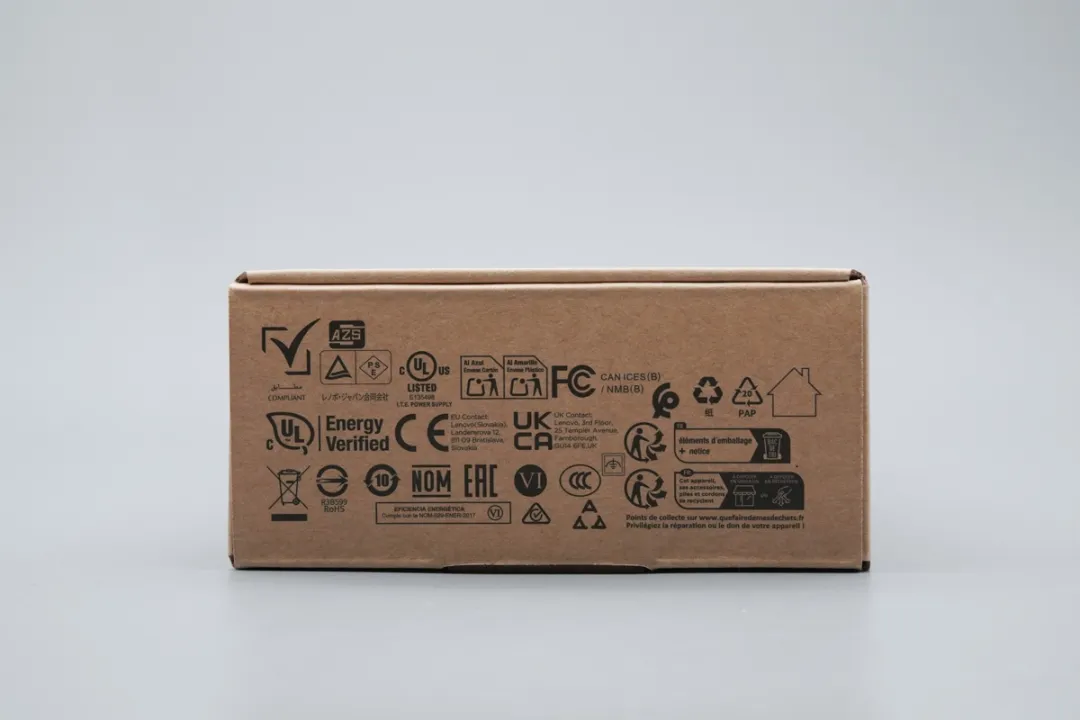
The side carries major global safety and EMC certifications: CCC, CE, FCC, UKCA, CB, UL/cUL, and PSE. It also meets RoHS, Energy Verified, and ErP requirements. Inside are the charger, a USB-C cable, and a user manual.
Design and Build Quality
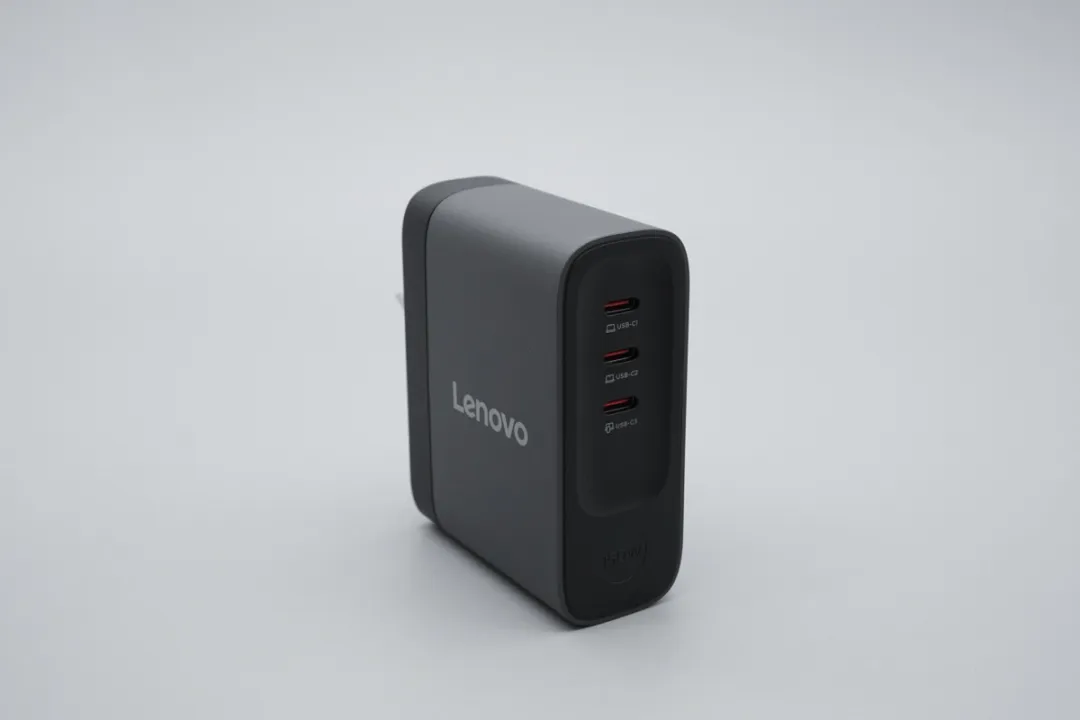
The charger uses a dark gray matte plastic shell that resists fingerprints. A silver Lenovo logo sits on the front. All three output ports are USB-C, with red port interiors for quick identification. USB-C1 and USB-C2 are main power ports, each up to 140W single-port output. USB-C3 delivers up to 65W. The rounded side profile also carries a Lenovo logo.
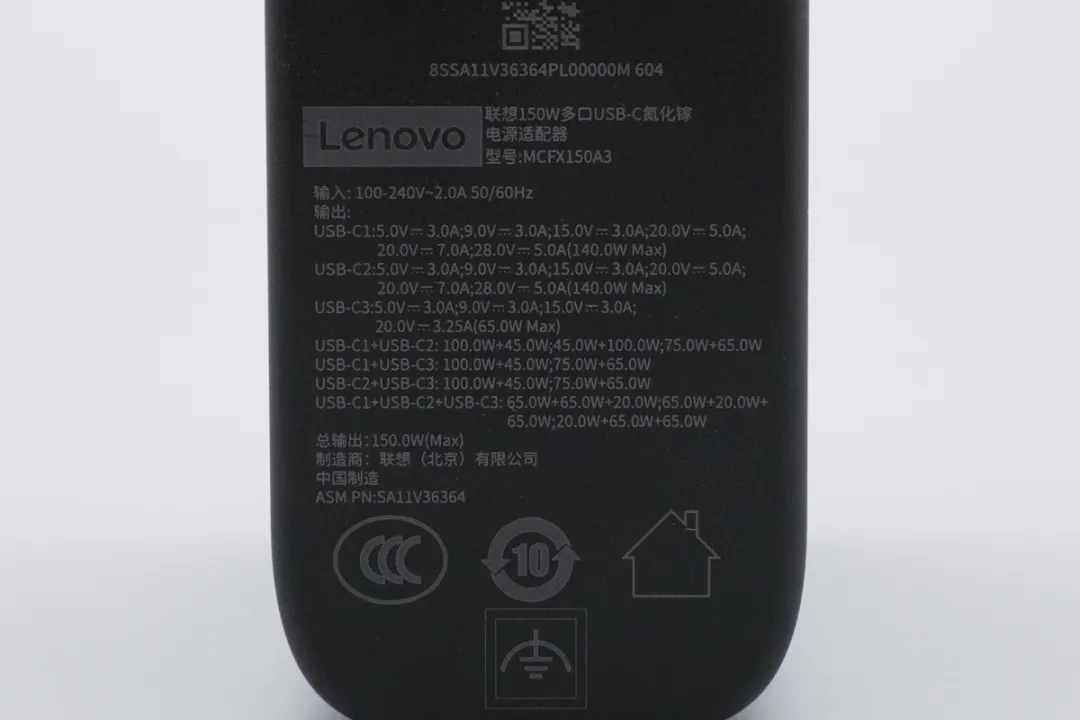
The adapter uses a fixed three-prong plug with a rubberized new national standard design, improving wall-socket stability and reducing loose contact or arcing. The bottom label includes model, input, output, and 3C certification.
Dimensions, Weight, and Power Density
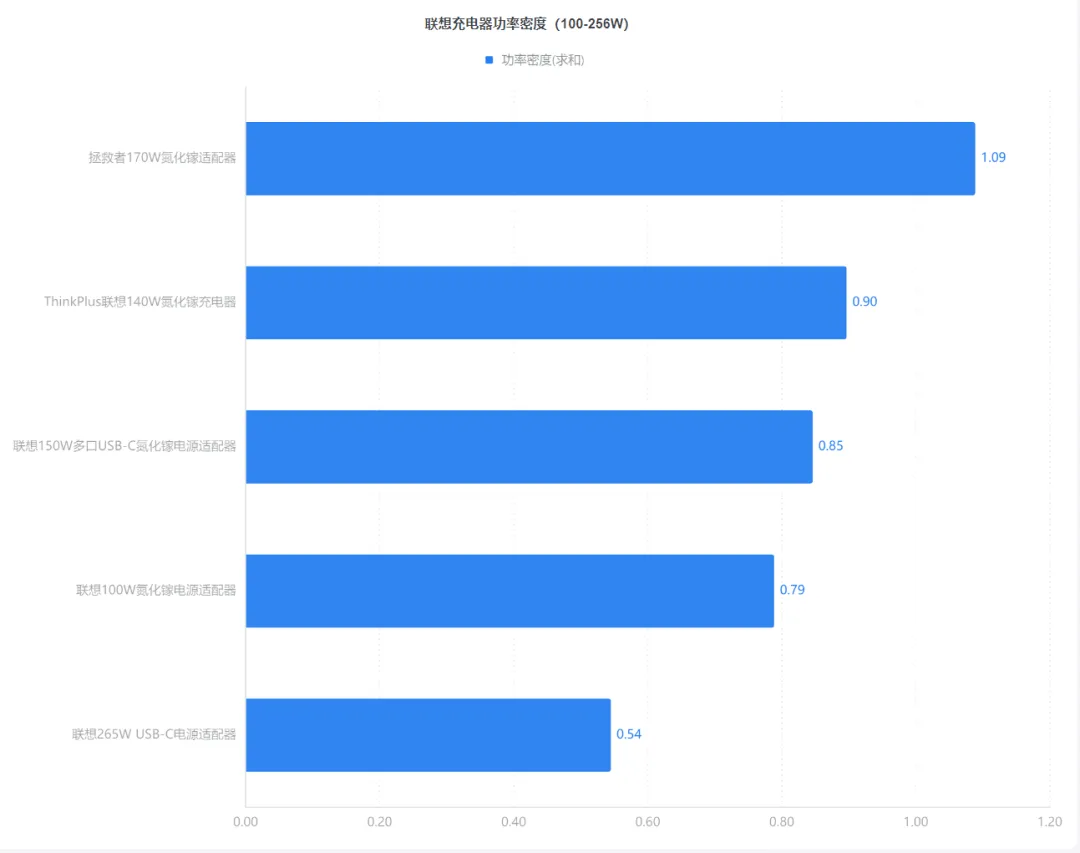
Measured dimensions are about 83.82 mm long, 65.10 mm wide, and 32.87 mm thick. Volume is roughly 179.36 cm³. With 150W output, power density is about 0.85 W/cm³. That is mid-pack in its family. For a commercial charger, extreme miniaturization is not the priority.
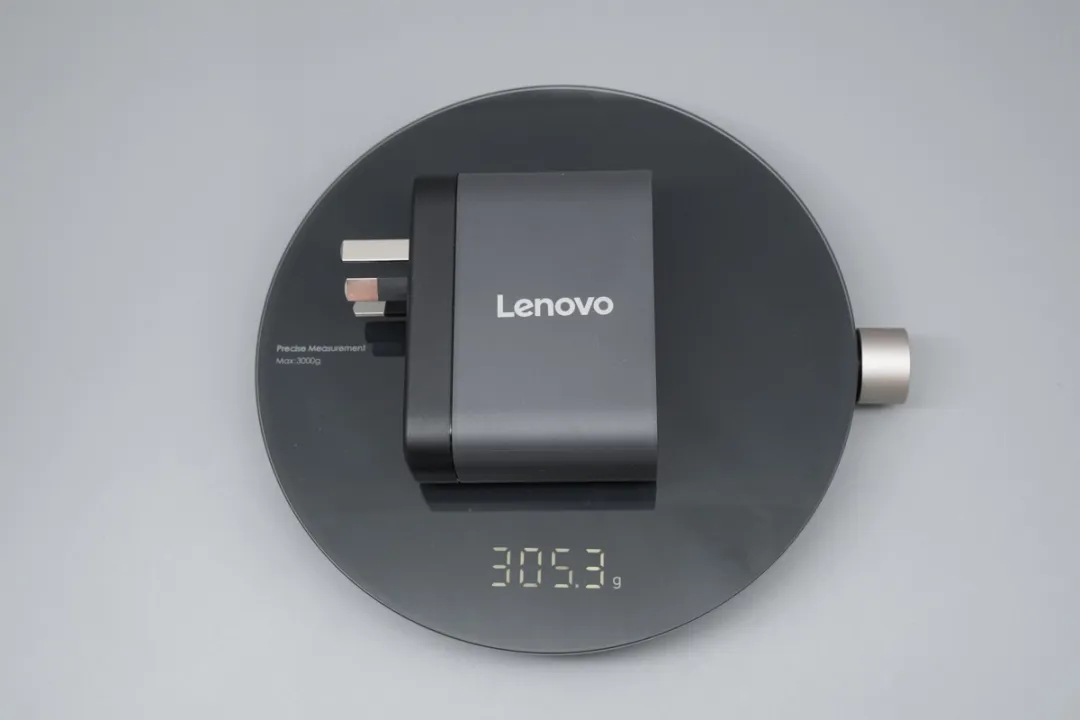
The unit weighs about 305.3 g. It is not the lightest, but the three-port layout and robust construction explain the weight. It can still be held in one adult hand. Compared with an Apple 140W charger, it is larger, but it offers more ports and different commercial priorities.
Included Cable and Connector Quality
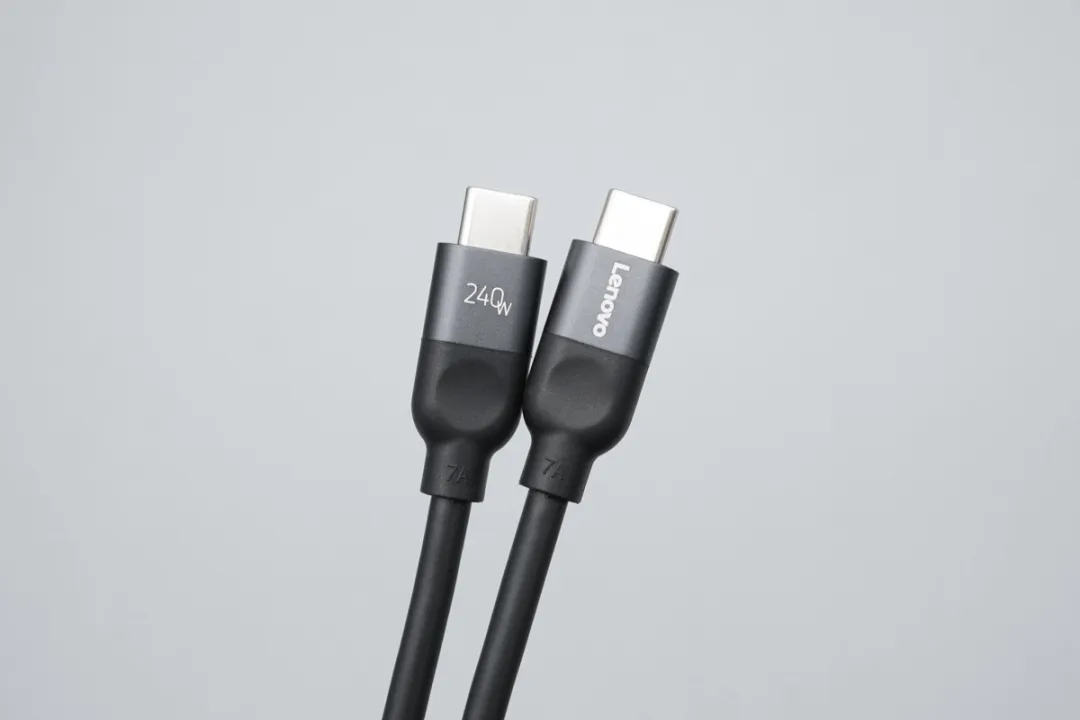
The bundled cable uses alloy and rubber overmolding. The connector ends carry the Lenovo logo and a 240W rating. The grip area has a circular recess for ergonomics, and the lower part is marked 7A, indicating support for 7A high current.
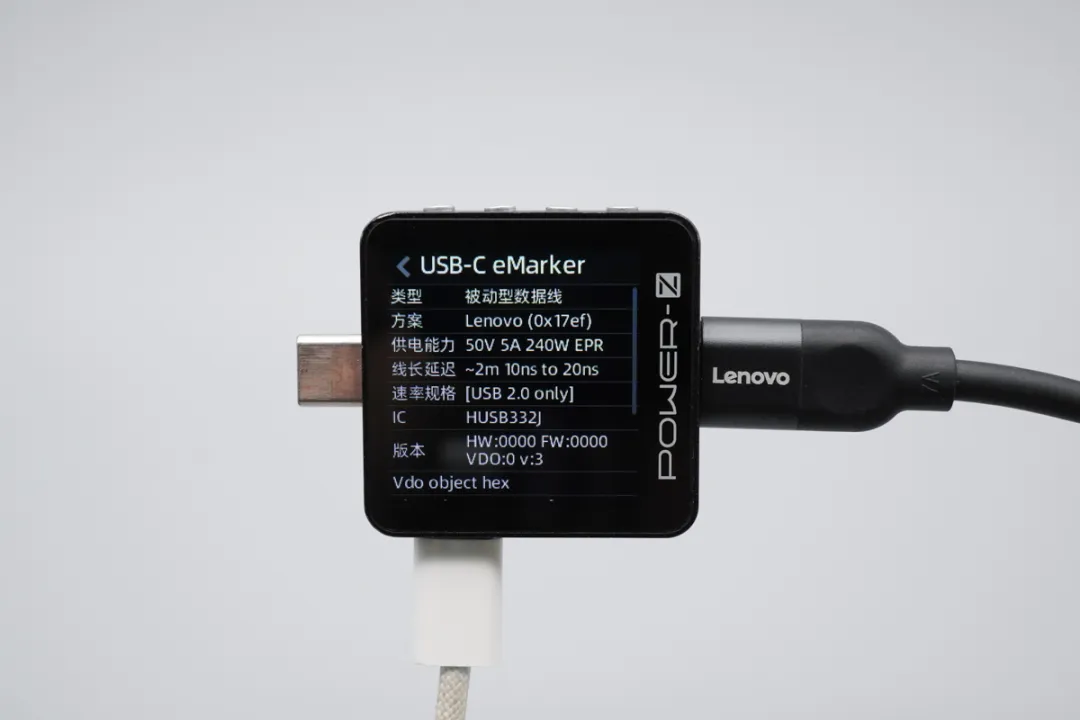
Testing shows the cable supports 50V/5A 240W EPR power delivery and USB 2.0 data transmission. Its IC is encoded as HUSB332J. Measured length is about 180 mm. It is short for some travel needs, but clearly built for high-current charging rather than long-distance desktop routing.
5,000 m Altitude Support
Ordinary chargers are often limited to 2,000 m altitude. This Lenovo adapter meets a 5,000 m commercial requirement. It can operate in highland areas and aircraft cabins. Internally, special processes raise component withstand voltage, while a more efficient thermal design helps expel heat even in low-pressure environments. This reduces overheating risk and improves charging safety.
1.5x Rated Peak Power
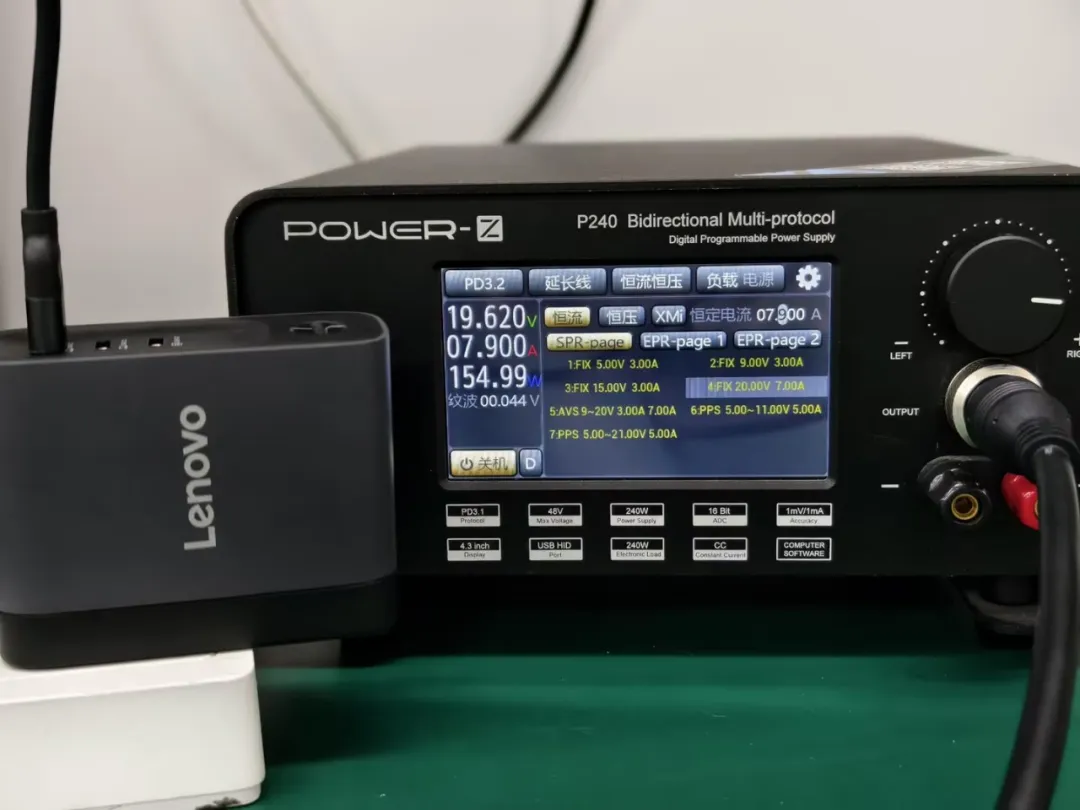
The adapter supports 1.5x rated peak power. During laptop high-load rendering or gaming, it does not cut off or reduce power unnecessarily. Using a POWER-Z P240 tester, the 20V mode reached 7.9A and 154.99W. In 27V mode, it reached 5.9A and 162.81W. This confirms the charger can handle transient high-power loads, helping users avoid interruptions during video rendering or professional software runs.
Ultra-Low Leakage and ESD Protection
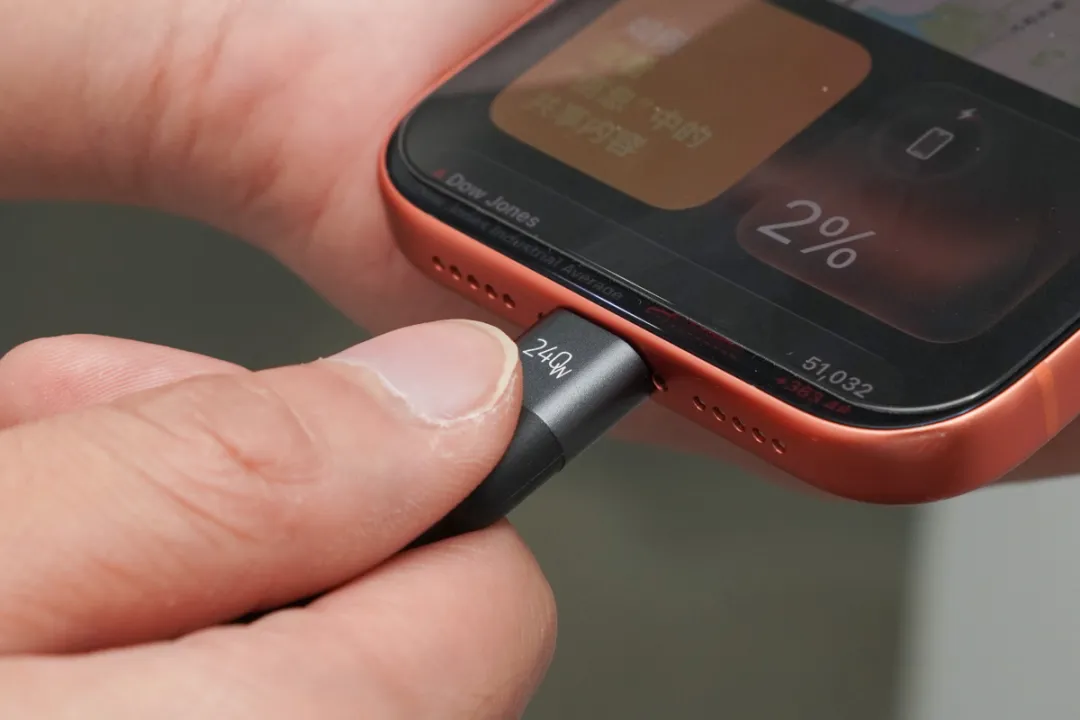
Leakage current is controlled at ≤50 µA. That figure meets industrial control equipment safety standards and far exceeds ordinary consumer electronics. In practice, even with wet hands, touching a phone’s metal frame while charging should not produce a tingling sensation.
This creates a zero-anxiety charging experience. The adapter also supports high-level ESD protection: 8 kV contact and 15 kV air discharge. In dry environments, frequent plugging and unplugging is less likely to damage charging chips.
Protocol Support: USB-C1 and USB-C2
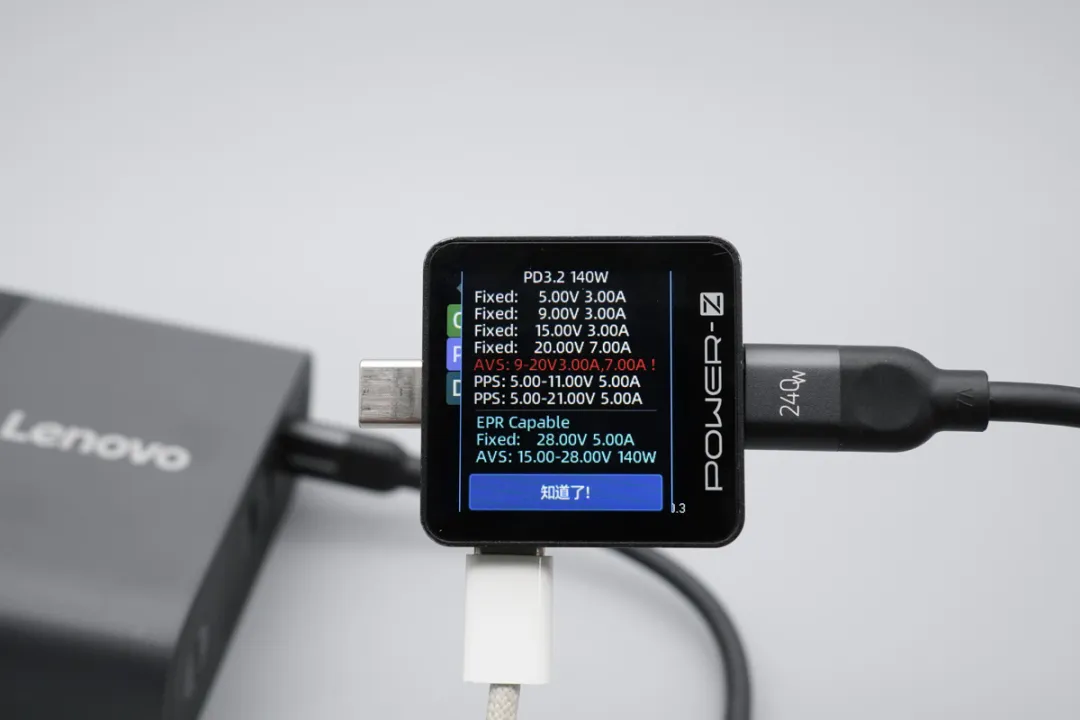
USB-C1 and USB-C2 offer identical protocols: QC3+/5, PD3.2, AVS, PPS, DCP, and Apple 2.4A. PDO reports include five fixed voltage steps: 5V3A, 9V3A, 15V3A, 20V7A, and 28V5A. They also support 5-11V5A and 5-21V5A PPS, plus a 15-28V 140W AVS range. This makes the adapter the only model in its family with PD3.2 AVS. For Apple users, voltage and current regulation can be more precise, improving compatibility.
Protocol Support: USB-C3
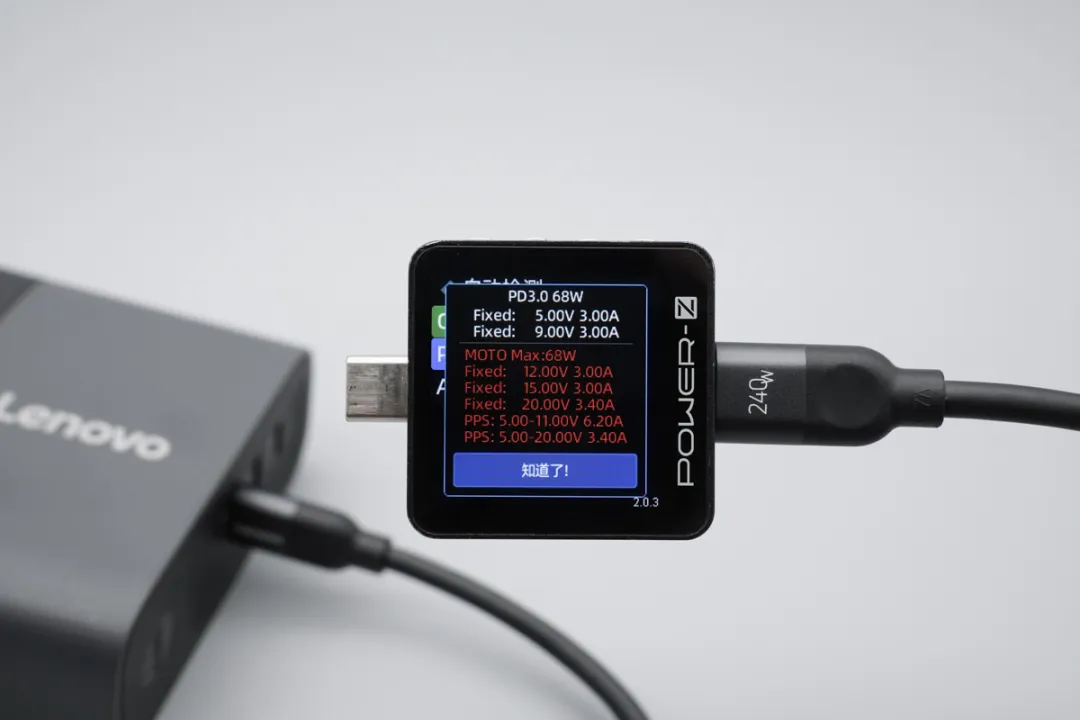
USB-C3 supports QC3+, PD3.0, DCP, and Apple 2.4A. Its PDO set includes 5V3A and 9V3A, plus 12V3A, 15V3A, 20V3.4A, 5-11V6.2A, and 5-20V3.4A private protocol steps. USB-C3 is rated for 65W output. In testing, devices that support high-power PD or PPS reached over 58W, while other devices landed in the 31-56W fast-charging range.
Compatibility Testing: Main Ports
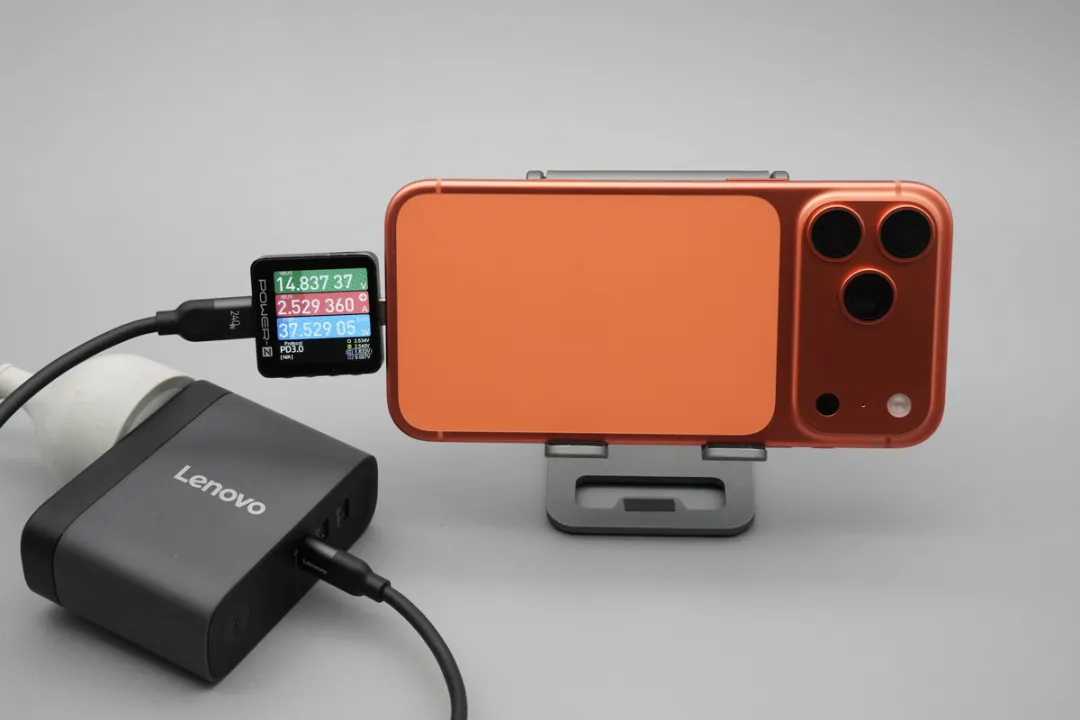
With an iPhone 17 Pro Max, the adapter delivered 14.84V, 2.53A, and 37.53W.
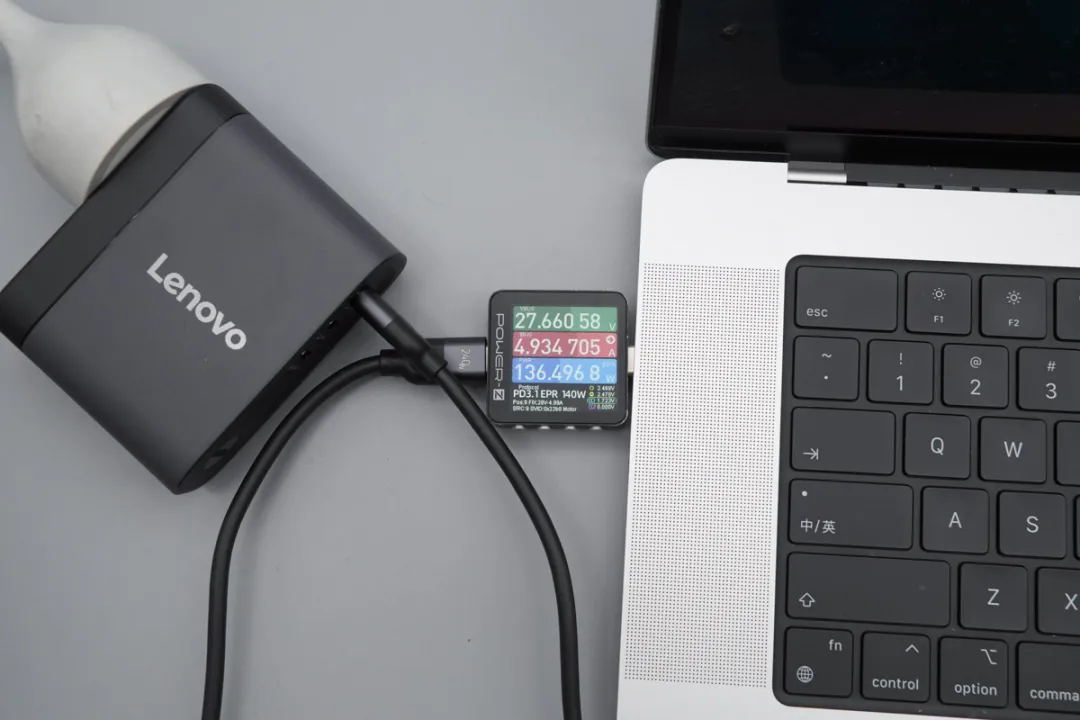
With a MacBook Pro 16 M4 Pro, it reached 27.66V, 4.93A, and 136.50W.
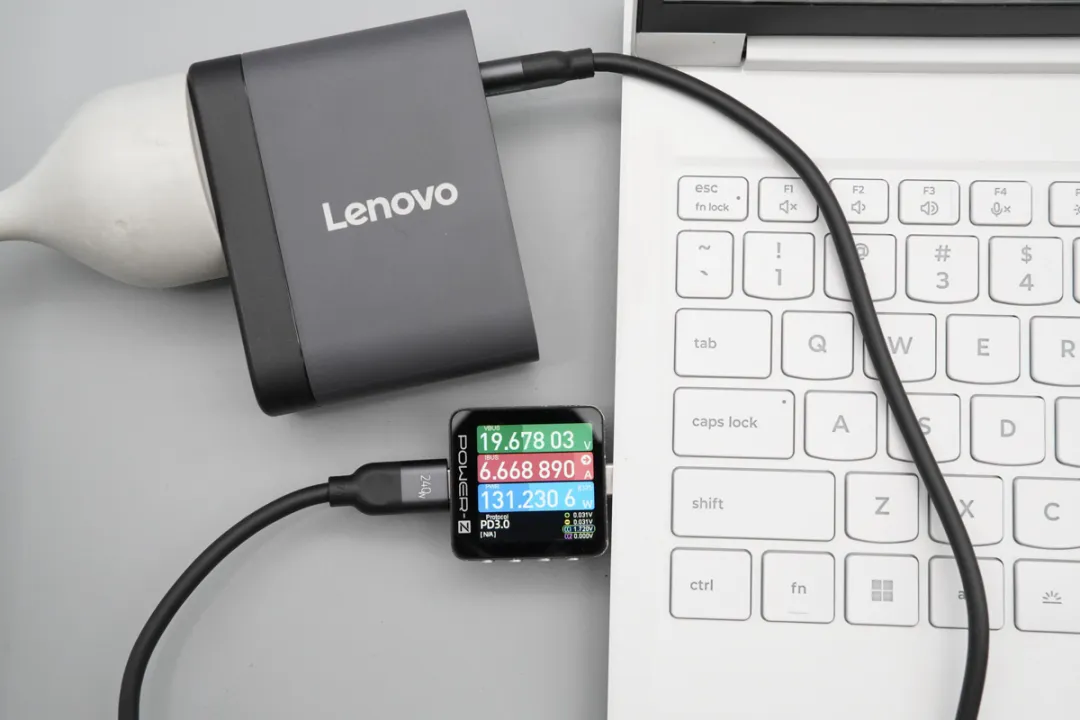
A Lenovo Legion Y9000X 2025 AI-powered laptop charged at 19.68V, 6.67A, and 131.23W.
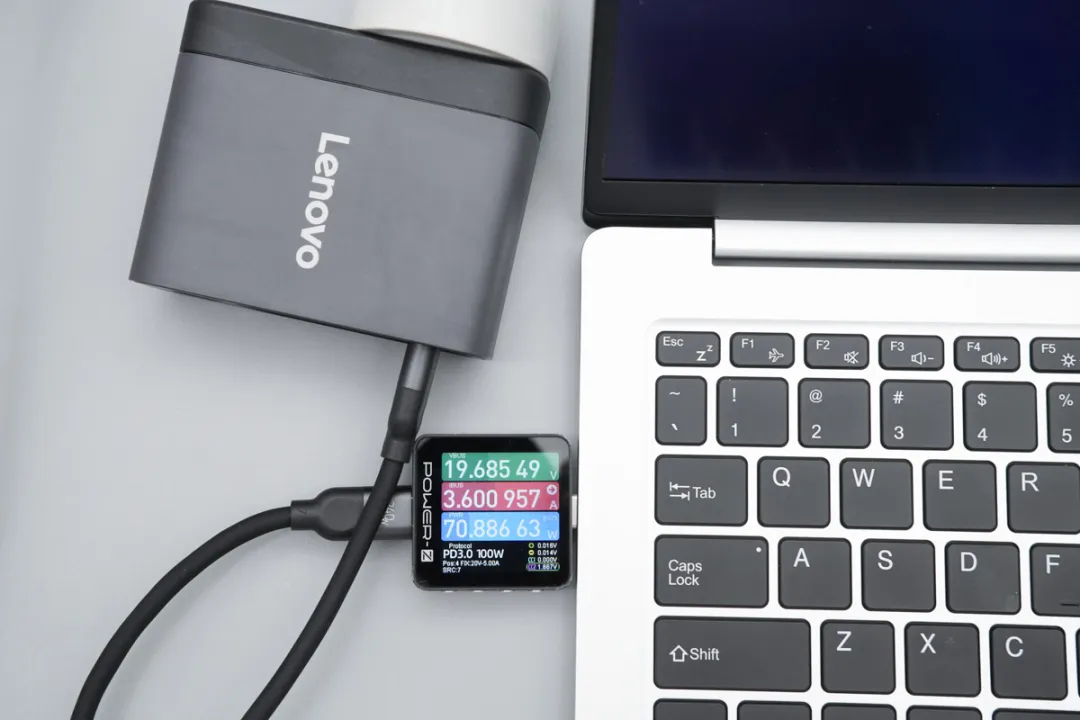
A Lecoo N140A laptop peaked at 19.69V, 3.60A, and 70.89W.
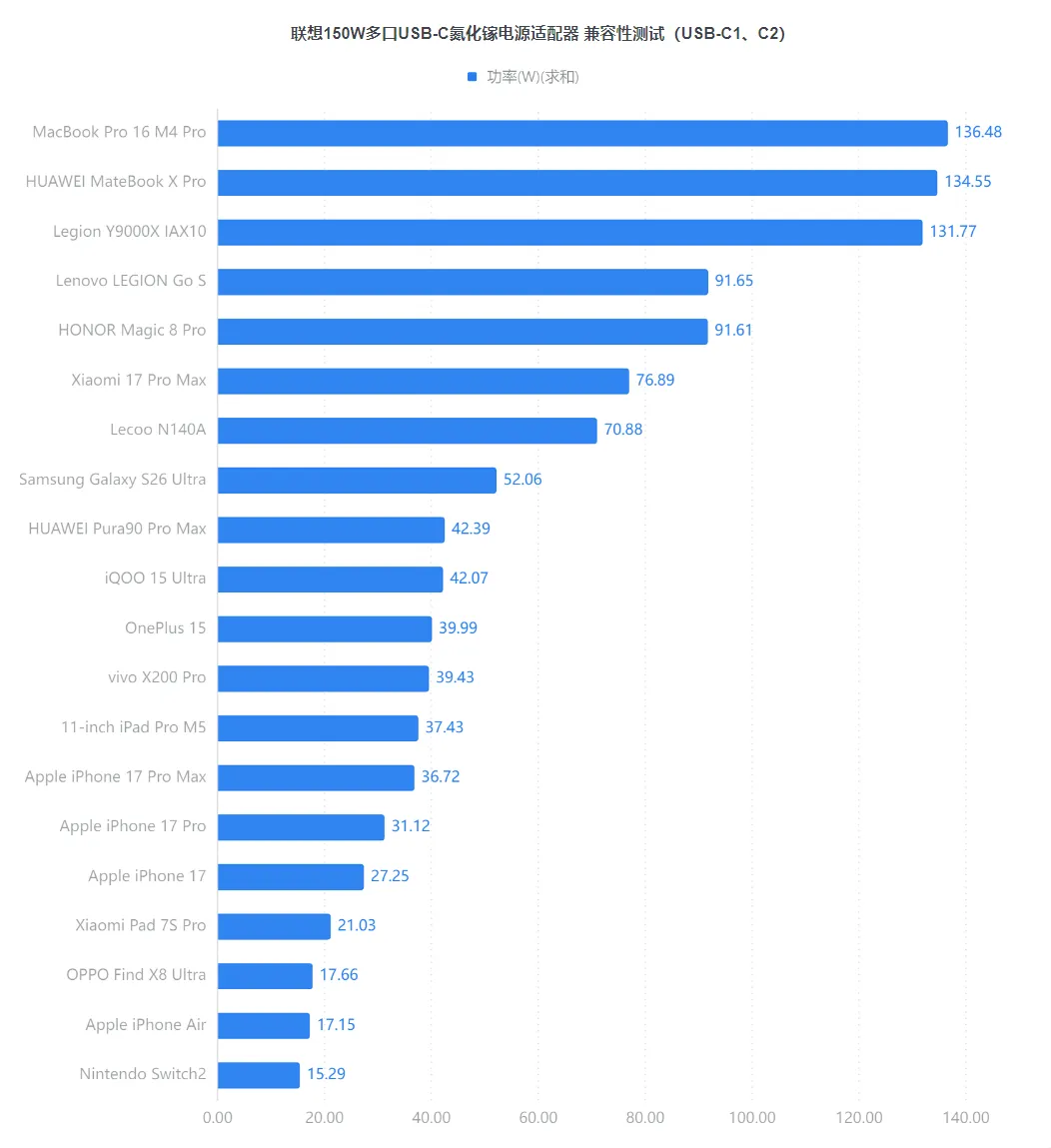
Across tests, high-end laptops received 131W-137W, 90W-class devices included high-performance handhelds and Honor Magic 8 Pro, Android flagships covered 35-77W, and iPhones, iPads, and Switch models used 15-40W. Most devices reached high-power fast charging.
Multi-Port Output and Smart Allocation
With a MacBook and Huawei MateBook X Pro connected, output was 58.70W and 62.14W. Adding an iPhone 17 Pro produced 58.72W, 62.19W, and 18.78W. The 150W multi-port capability can fast-charge most electronic devices simultaneously. In the same family, most models offer only single-port high power. They can charge one device quickly, but cannot meet multi-device demand at the same time.
Full Charging Test: iPhone 17 Pro Max
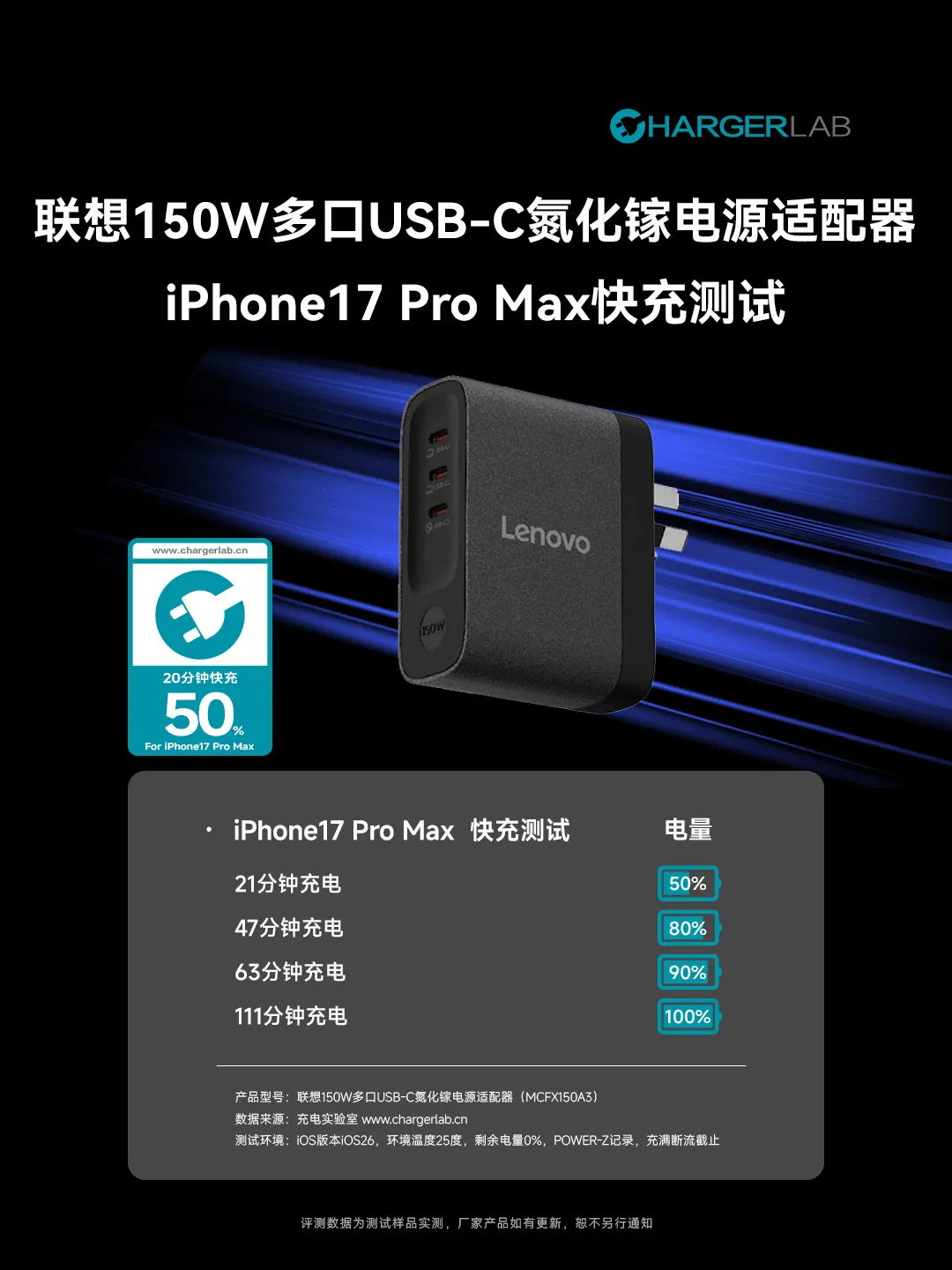
Charging was tested in a 25°C chamber with a POWER-Z KM003C. After connection, the phone negotiated 15V and charged at 37.3W for five minutes. Power then dropped to 28.2W until 24 minutes, 24.9W until 27 minutes, 15.7W until 33 minutes, and 9.3W until 58 minutes. At 1 hour 10 minutes, voltage fell to 5V and trickle charging began. The session ended at 1 hour 51 minutes 17 seconds. It reached 50% in 20 minutes, 67.9% in 30 minutes, 80% in 44 minutes, 90% in 63 minutes, and 100% in 1 hour 51 minutes.
Full Charging Test: Laptop
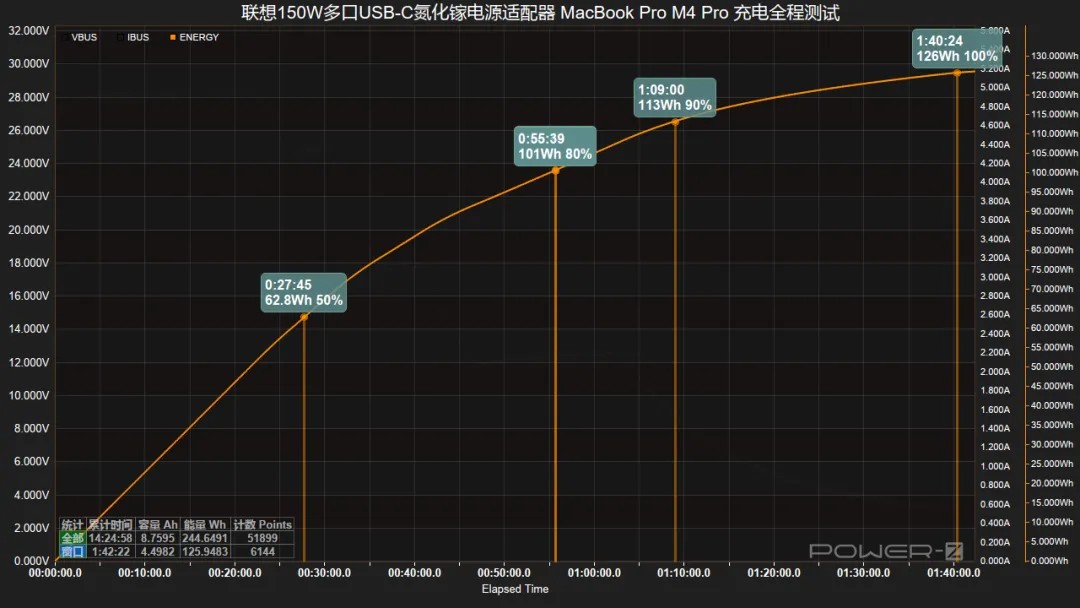
For a laptop, the adapter negotiated 28V and charged at 139W until 22 minutes. Power then fell to 122W until 30 minutes, 87.4W until 40 minutes, and 61.8W until 1 hour 03 minutes. Trickle charging followed, ending at 1 hour 40 minutes 24 seconds. The laptop reached 50% in 27 minutes, 80% in 55 minutes, 90% in 1 hour 09 minutes, and 100% in 1 hour 40 minutes 24 seconds.
Standby Power Consumption
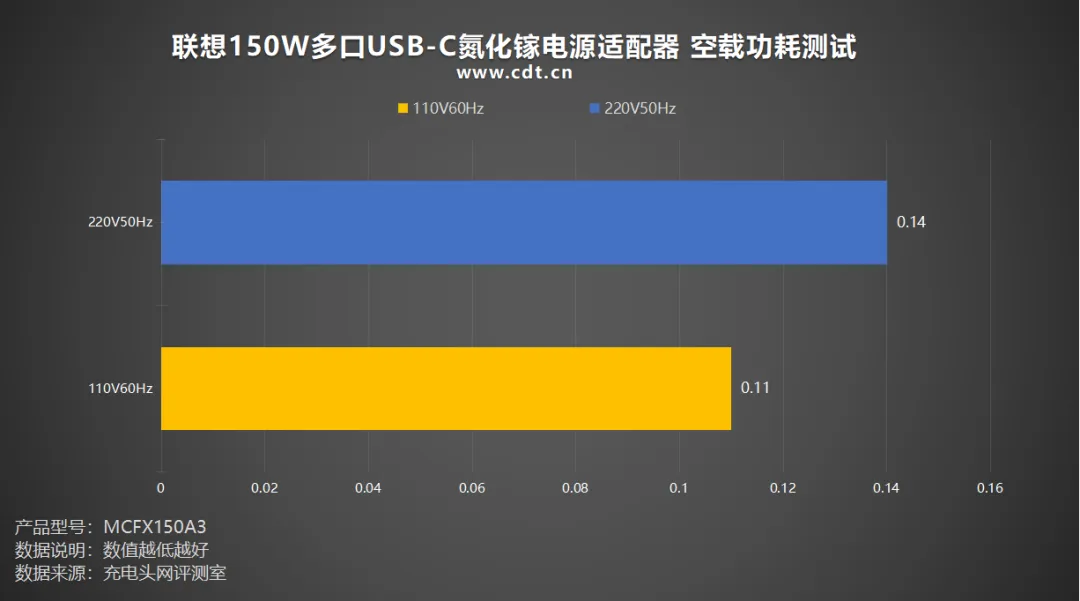
Standby power was measured with a Yokogawa WT310E digital power meter. At 220V/50Hz, no-load power was about 0.14W. Daily consumption was about 0.00336 kWh; at 0.6 yuan/kWh, annual standby cost is under 0.74 yuan. At 110V/60Hz, no-load power was as low as 0.11W, daily consumption was 0.00264 kWh, and annual standby cost was about 0.58 yuan. Standby control is excellent.
Conversion Efficiency
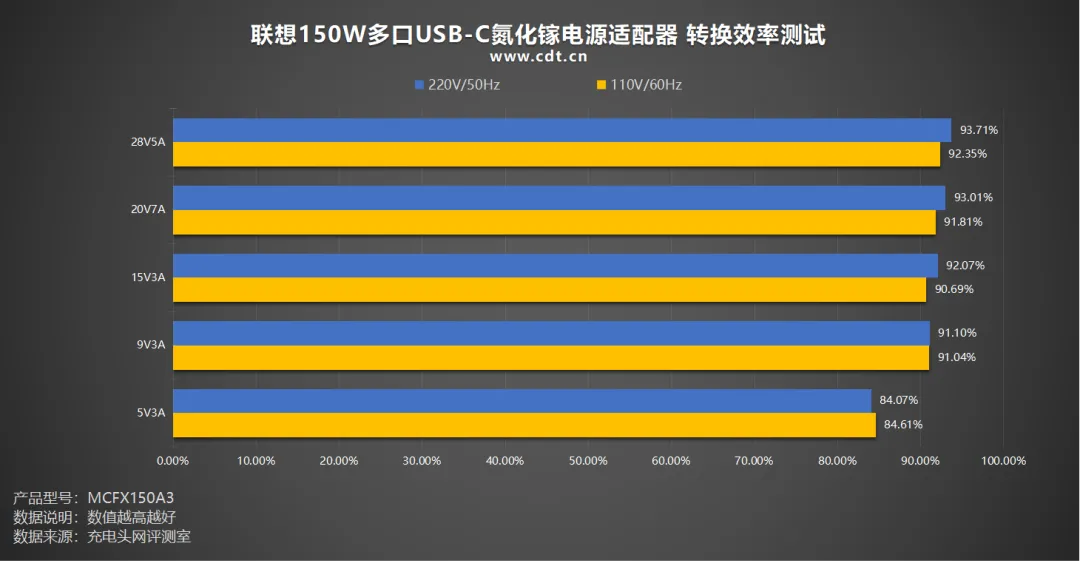
Efficiency was tested at 220V/50Hz and 110V/60Hz. At 220V/50Hz, the best step was 28V5A at 93.71%, while the lowest was 5V3A at 84.07%. Most steps stayed between 91% and 92%. At 110V/60Hz, the best step was again 28V5A at 92.35%, and the lowest was 5V3A at 84.61%. Most steps remained between 90% and 92%. These are strong results for a high-power multi-port adapter.
Ripple Testing
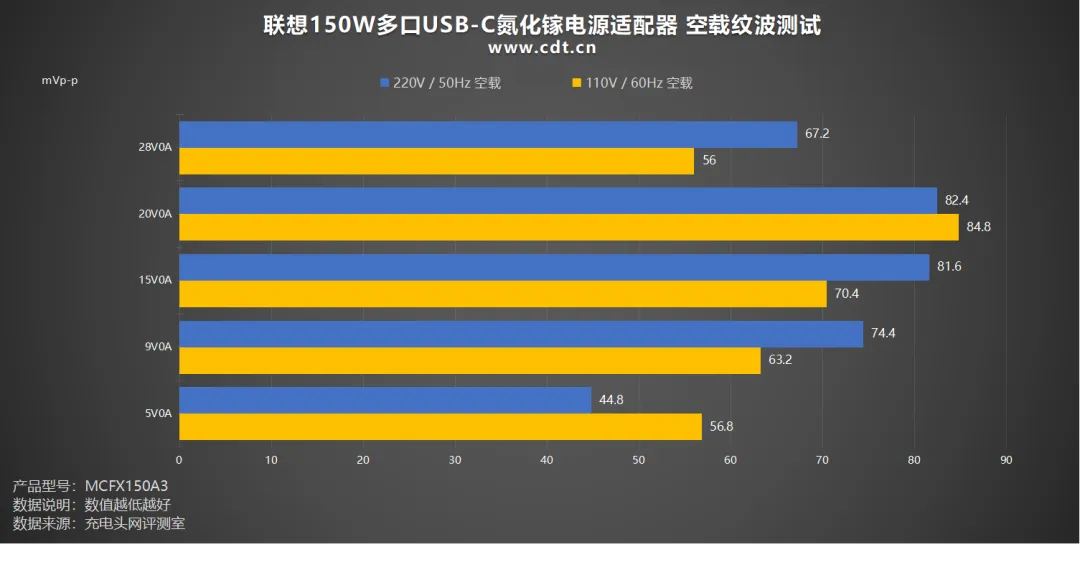
Ripple indicates output quality; lower is better. At 220V/50Hz no-load, the highest ripple was 20V0A at 82.4 mVp-p, while the lowest was 5V0A at 44.8 mVp-p. At 110V/60Hz no-load, the highest was 20V0A at 84.8 mVp-p, and the lowest was 28V0A at 56 mVp-p. Under load at 220V/50Hz, the highest was 28V5A and 9V3A at 81.6 mVp-p, and the lowest was 5V3A at 56.8 mVp-p. At 110V/50Hz under load, the highest was 5V3A at 81.6 mVp-p, and the lowest was 9V3A at 66.4 mVp-p. At 220V/50Hz, all output ripple stayed at or below 84.8 mVp-p.
60-Hour Load and Temperature Test
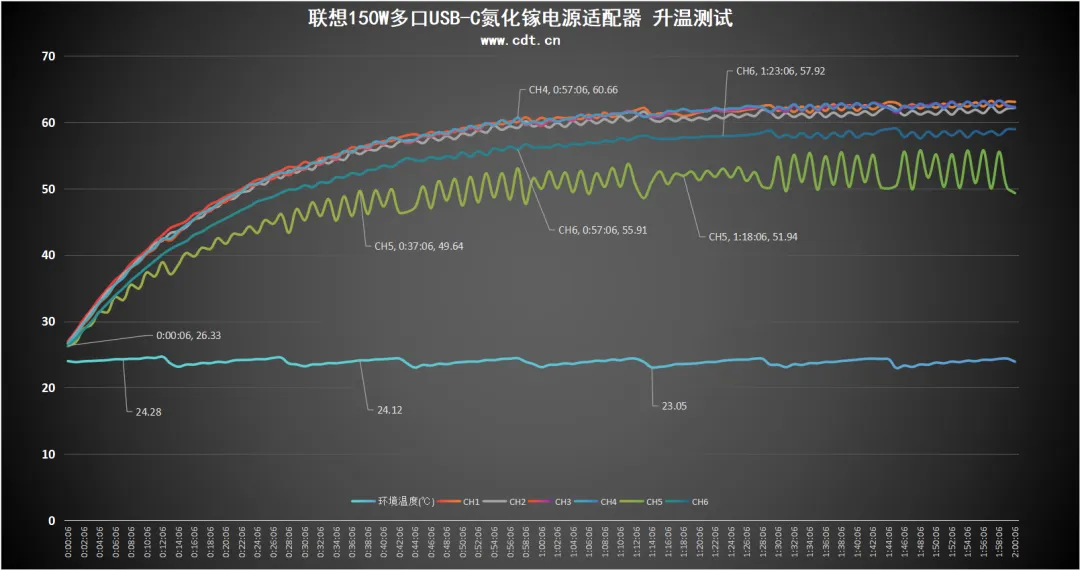
To test long-term stability, six surface points were monitored with patch thermocouples. The adapter ran at 28V5A full load for 60 hours in a 25°C chamber, with a POWER-Z KM003C recording data. The power curve remained constant, with no fluctuation or power reduction. In the first two hours, temperatures rose smoothly, peaking around 60°C and dipping to about 51°C. Over 60 hours, the hottest point stayed around 62°C, while cooler points remained near 56°C. Thermal control is stable and safe.
Verdict: Who Should Buy the Lenovo 150W GaN Adapter?
The Lenovo 150W multi-port USB-C GaN adapter sits in the brand’s high-end commercial line. It differs from 100W, 140W, and 170W single-port or 2C1A models. It is the only Lenovo 100W-plus fast charger with three USB-C ports and a focus on simultaneous multi-device power.
Built on a GaN platform, it follows six commercial-grade standards: 1.5x peak power, 5,000 m altitude operation, ≤50 µA leakage, and 15 kV air ESD protection. Its 40°C full-load design exceeds ordinary consumer chargers. Dual main ports reach 140W, the third port reaches 65W, and it covers 5V-28V with PD3.2, AVS, and PPS. MacBook and Lenovo Legion laptops can charge near full power, while Android flagships, iPhones, and Switch models are widely supported. Multi-port allocation enables two laptops and a phone to fast-charge together.
Efficiency is generally around 91%, peaking at 93.71%, and full-load temperatures remain reasonable. Global certifications include CCC, CE, and FCC. It sacrifices some portability and power density for three-port functionality and commercial durability. It is not for users who want the smallest possible single-device charger. For business offices, desktop multi-device users, and frequent cross-region travelers, it is a one-step Lenovo original fast-charging solution.
 Lenovo CC100 100W Multi-Port USB-C GaN Charger Review: AHB Architecture and 1.5x Peak Output Tested