



The Mini Revolution: Why the 30W GaN Charger Is Replacing the 20W Standard in Global Distribution
 27 Jan,2026
In the fast-paced world of consumer electronics accessories, the only constant is change. For years, the 20W PD (Power Delivery) charger was the gold standard for smartphone users, particularly after major smartphone manufacturers removed in-box power adapters. However, as battery capacities increase and consumers demand ultra-portability, the market is undergoing a significant shift.
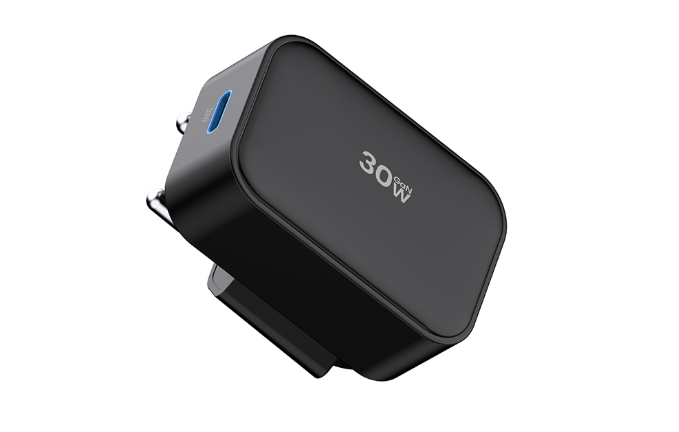
For distributors, wholesalers, and brand owners, the new profit frontier lies in a compact, high-efficiency powerhouse: the 30w gan charger.
This article analyzes why the 30W Gallium Nitride (GaN) charger is poised to become the dominant SKU in the mobile accessory market and why retailers must update their inventory strategies immediately.
The Evolution of Charging Speeds: Beyond the 20W Threshold
To understand the rise of the 30W charger, we must first look at the devices driving the demand. Modern flagship smartphones, including the latest iPhone series and Samsung Galaxy S models, have gradually increased their peak input wattages.
While a 20W charger can sufficiently charge an iPhone 12, newer models like the iPhone 15 Pro and the anticipated iPhone 16 series are capable of accepting peak speeds closer to 27W-30W during the initial "constant current" phase of charging. Using a 20W charger on these devices is technically functional, but it leaves charging speed on the table.
Consumers are becoming increasingly tech-savvy. They are no longer satisfied with "fast charging"; they want "max speed charging." The 30w gan charger perfectly saturates this demand, offering the maximum supported charging speed for almost every non-gaming smartphone on the market today, without the bulk or expense of a 65W laptop charger.
Why GaN Technology Changes the Game
Historically, jumping from 20W to 30W meant a significant increase in the physical size of the power brick. Silicon-based components required larger transformers and more space for heat dissipation. This is where Gallium Nitride (GaN) technology creates a massive competitive advantage for B2B buyers.
GaN is a wide-bandgap semiconductor that allows electrons to move faster than they do in silicon. This efficiency translates to less energy lost as heat. Because the components run cooler, internal structures can be packed much more densely.
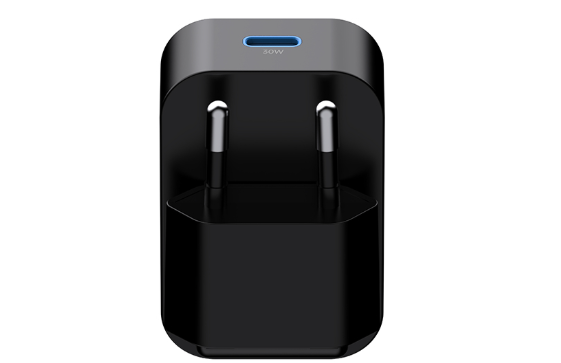
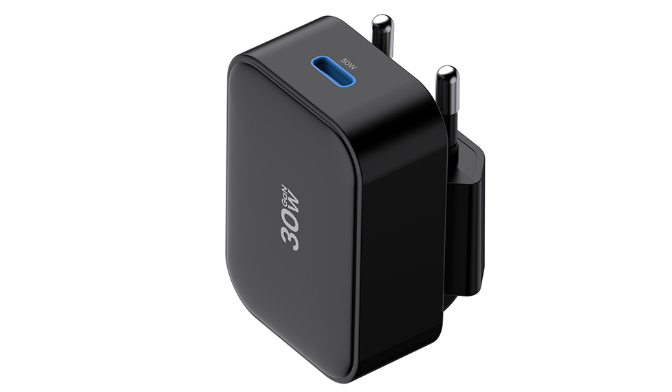
The result is a 30w gan charger that is often the same size—or even smaller—than a traditional 5W or 20W silicon charger. For the end-user, this "lipstick size" or "cookie size" form factor is irresistible. It fits in a pocket, doesn't block adjacent outlets on a power strip, and is perfect for travel. For the retailer, smaller packaging means lower logistics costs and higher shelf density.
The Economic Case for Wholesalers and Brand Owners
From a sourcing and manufacturing perspective, upgrading your product line to GaN 30W solutions offers compelling ROI (Return on Investment).
1. Future-Proofing Inventory Stocking 20W chargers carries a risk of obsolescence. As tablets (like the iPad Air and iPad Pro) and even lightweight laptops (like the MacBook Air) adopt USB-C charging, a 20W charger is often insufficient to power them while in use. A 30w gan charger, however, can slowly charge a MacBook Air and power an iPad at full speed. By offering a 30W solution, you provide a "one-charger-fits-all-mobile-devices" solution, increasing the perceived value for the customer.
2. Higher Average Selling Price (ASP) While the manufacturing cost of GaN is slightly higher than silicon, the premium perception allows brands to command a higher retail price. Customers are willing to pay extra for the "Mini" form factor and the "GaN" terminology, which has become synonymous with quality and safety.
3. Differentiation in a Crowded Market The market is flooded with generic white 20W cubes. Tommox helps our OEM/ODM partners differentiate by offering customizable 30w gan charger designs. Whether it is a unique texture, a foldable plug for US/EU/UK markets, or an integrated LED indicator, these small details help your brand stand out on Amazon or retail shelves.
Safety: The Non-Negotiable Priority
With higher power density comes a greater responsibility for safety. One of the common concerns B2B buyers have regarding "Mini" chargers is heat management.
A reputable factory does not simply shrink the charger; they engineer it. At Tommox, our manufacturing process for the 30w gan charger involves rigorous aging tests and thermal management protocols. We utilize high-quality controller chips that actively monitor temperature and adjust voltage output in real-time to protect the connected device.
When sourcing chargers, it is crucial to verify that the manufacturer complies with international safety standards, including CE, FCC, RoHS, and ETL. A cheap, uncertified charger can damage consumer devices and destroy a brand's reputation overnight. Investing in quality-assured manufacturing is the best insurance policy for your business.
Conclusion: The Time to Upgrade is Now
The transition from silicon to GaN is not a trend; it is the industry's new baseline. As mobile devices become more power-hungry and consumers demand portability without compromise, the 30w gan charger stands out as the perfect equilibrium of size, speed, and cost.
For distributors and brands looking to capture the next wave of accessory sales, the strategy is clear: phase out the bulky silicon adapters and embrace the compact power of GaN.
Ready to launch your own line of ultra-compact fast chargers? As a leading PD charger manufacturer, Tommox offers comprehensive OEM/ODM services to help you bring your vision to life. Contact our team today to discuss specifications, molding options, and wholesale pricing.
 Direct Sourcing Strategy: Maximizing Profit Margins in the GaN Charger Market