



Apple 70W USB-C Power Adapter (A3543) Review: PD3.2 AVS and AC Connector 2 Upgrade
 17 Nov,2026
Introduction: A Quiet but Targeted Refresh
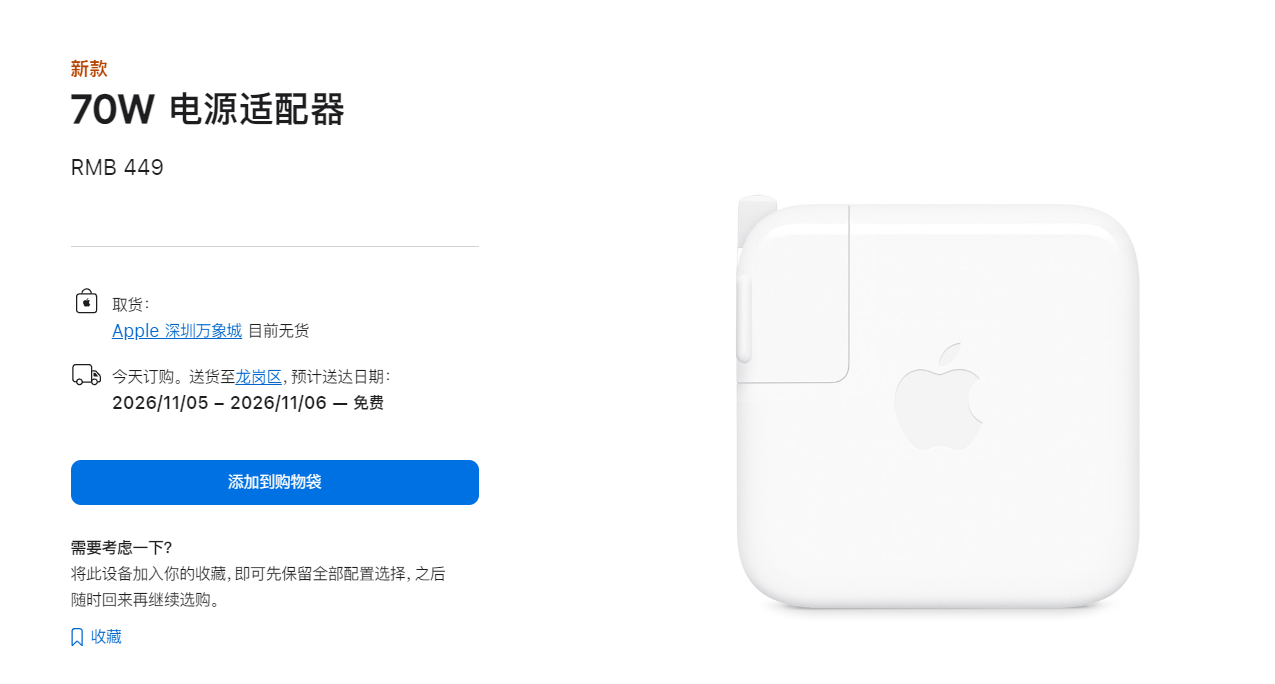
Alongside Apple’s latest device lineup, Apple quietly added a new 70W USB-C Power Adapter to its online store. The model is A3543, and it was purchased immediately for testing. On the surface, it keeps the same 70W power class and familiar Apple design.
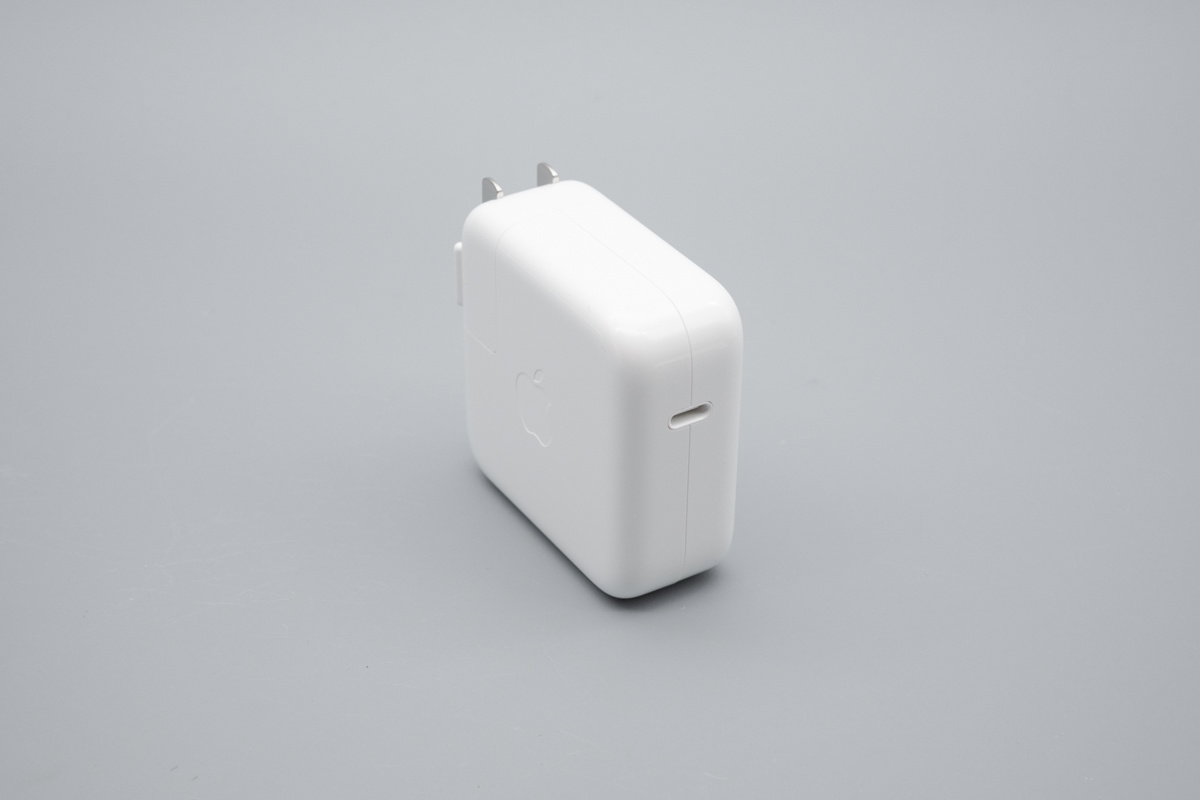
The real changes are more specific: it adds PD3.2 SPR AVS support and switches to the new AC Connector 2 interface. The adapter uses a single USB-C output, foldable China-standard prongs, and AVS fast-charging support for iPhone 18 Pro series and iPhone Duo, filling the previous generation’s missing 18V AVS gap. This review examines what actually changed and how the adapter performs.
Design and Build: Familiar Block, New Safety Details
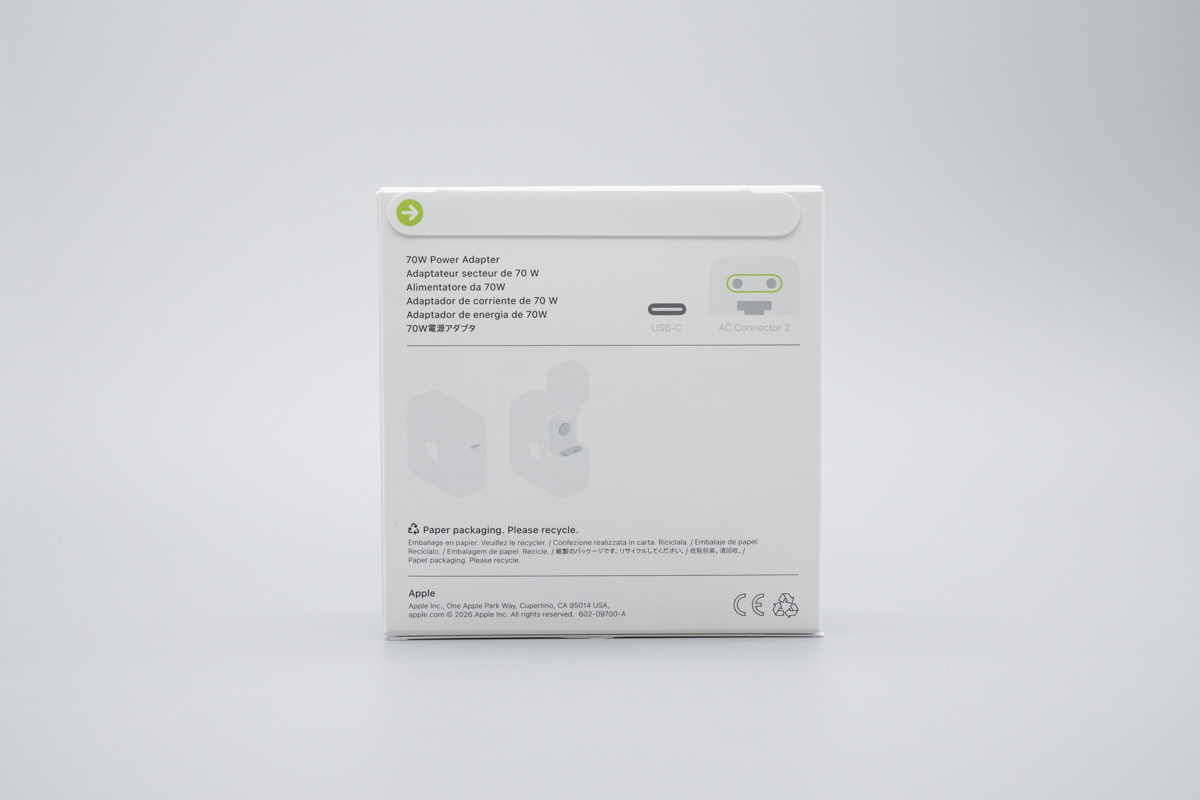
The retail package follows Apple’s minimalist white-box style. The back includes multilingual product names, an interface diagram, USB-C output and replaceable AC prong structure, recycling information, origin, and certification marks.
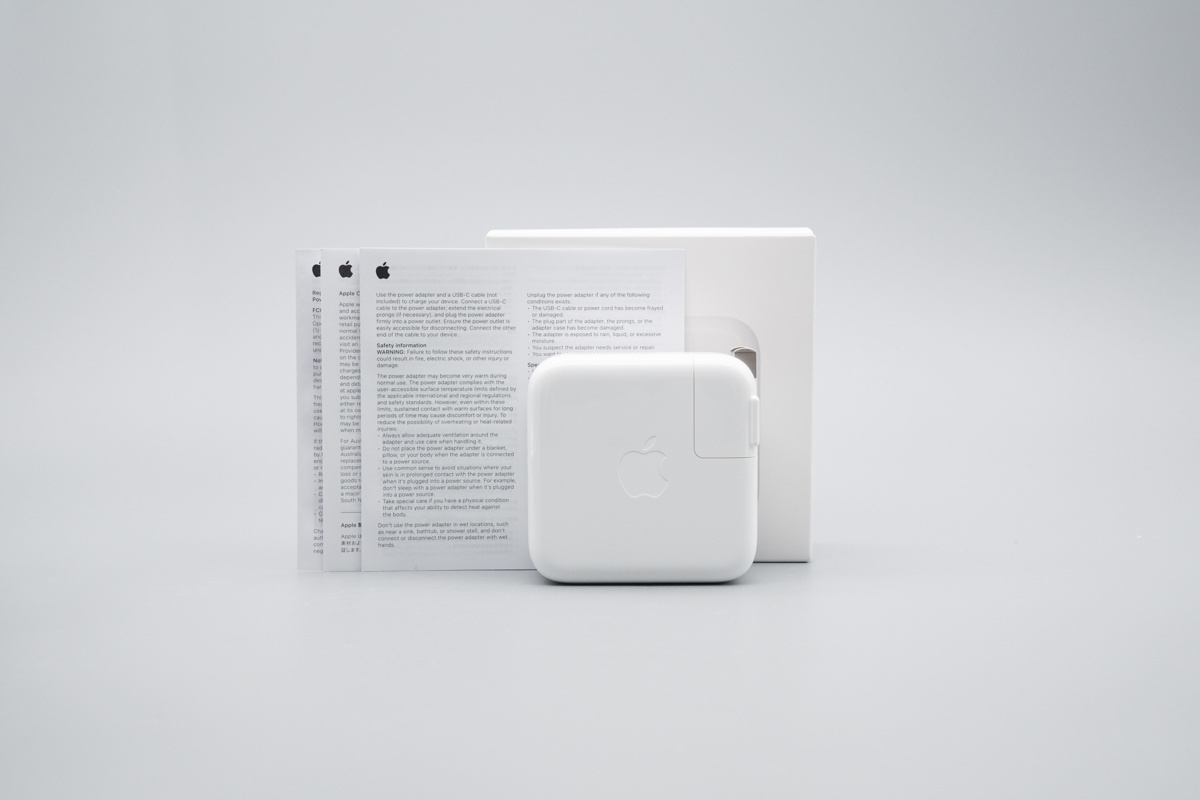
Inside the box are the 70W adapter and a multilingual manual—no charging cable is included.The adapter keeps Apple’s signature square shape with a white matte shell and a raised Apple logo.
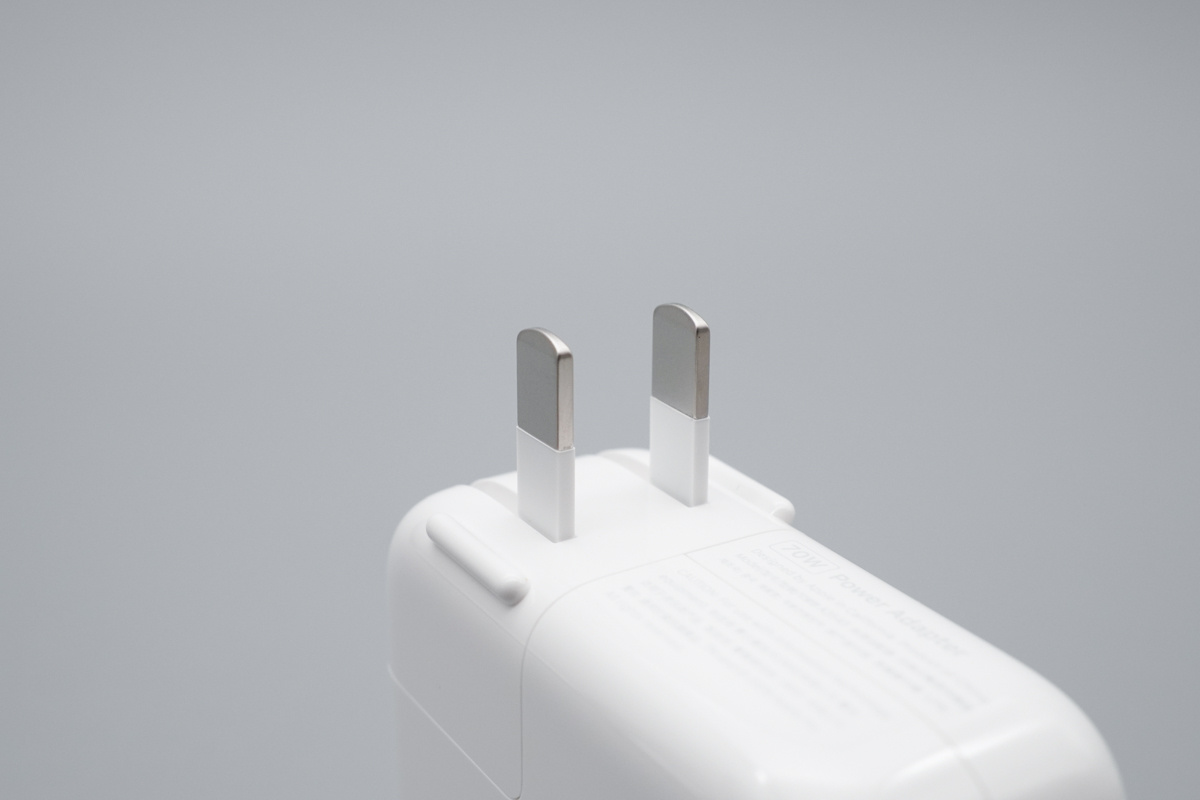
The foldable China-standard prongs make it easier to store without scratching items in a bag. Beyond the folding design, the prong area now uses an overmolded structure that complies with China’s newer national standard, improving safety.
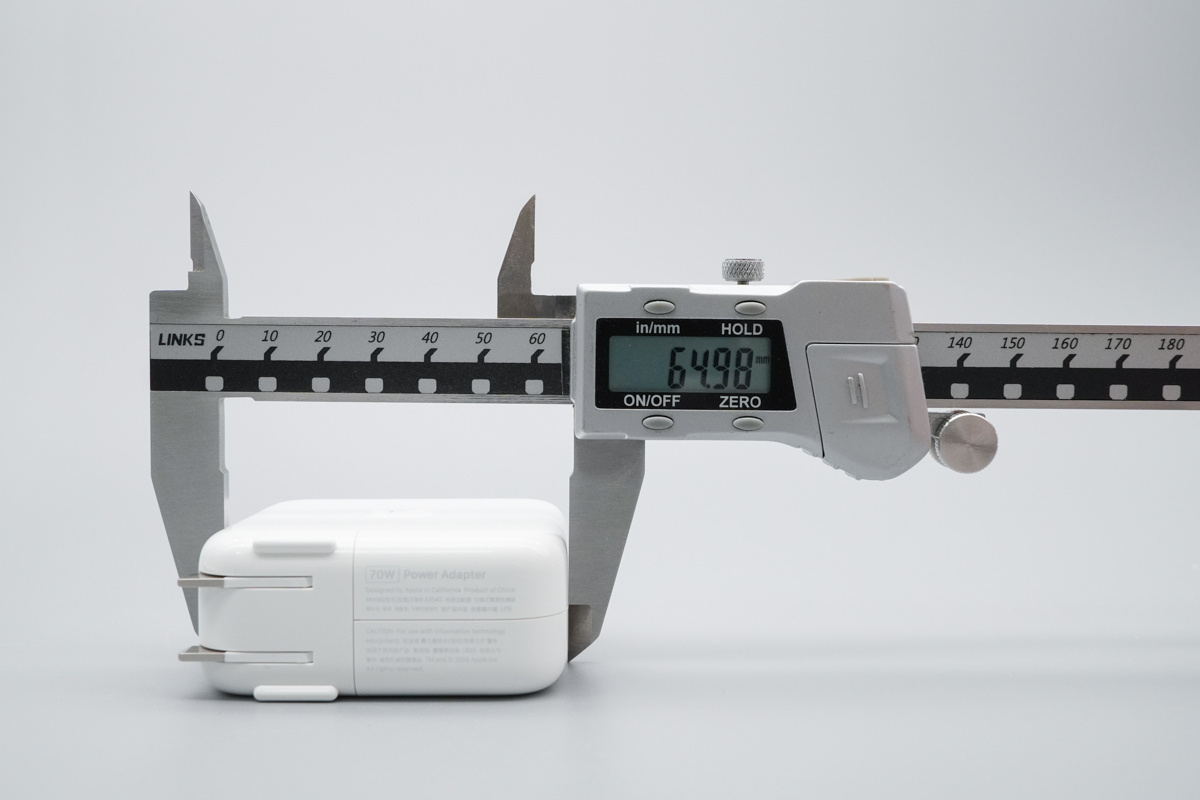
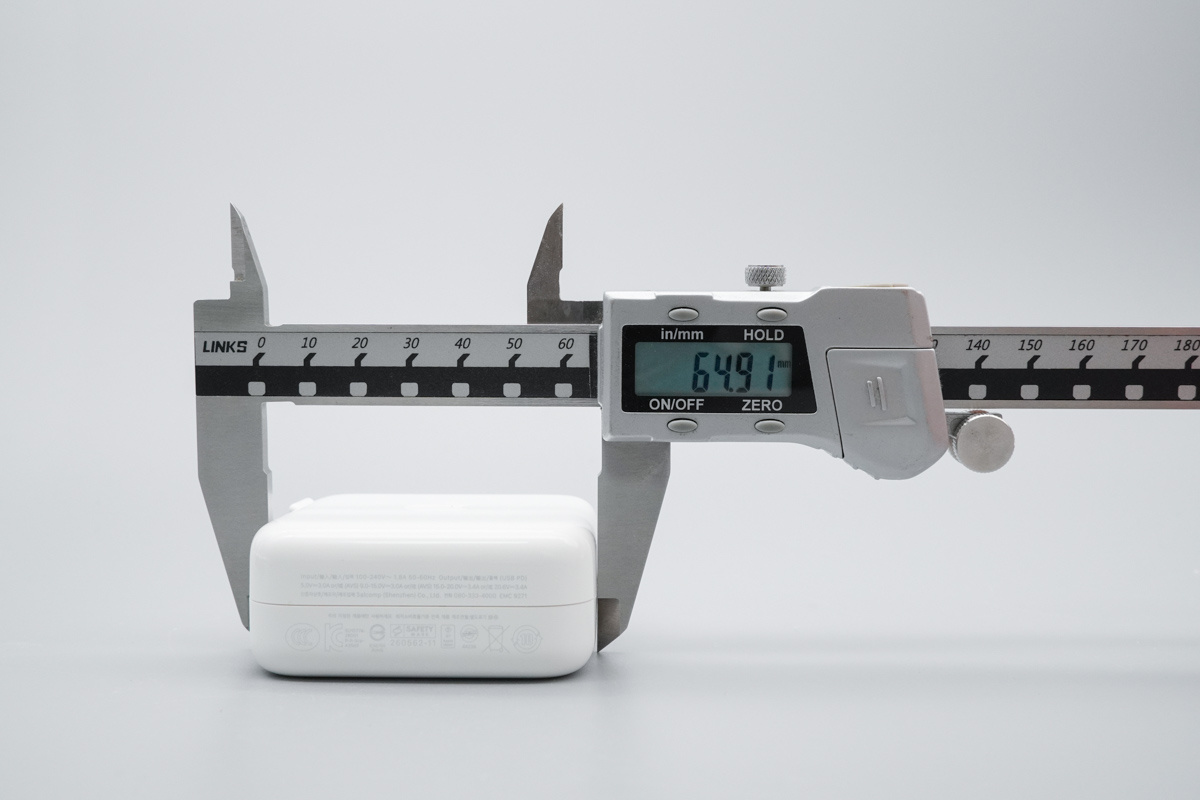
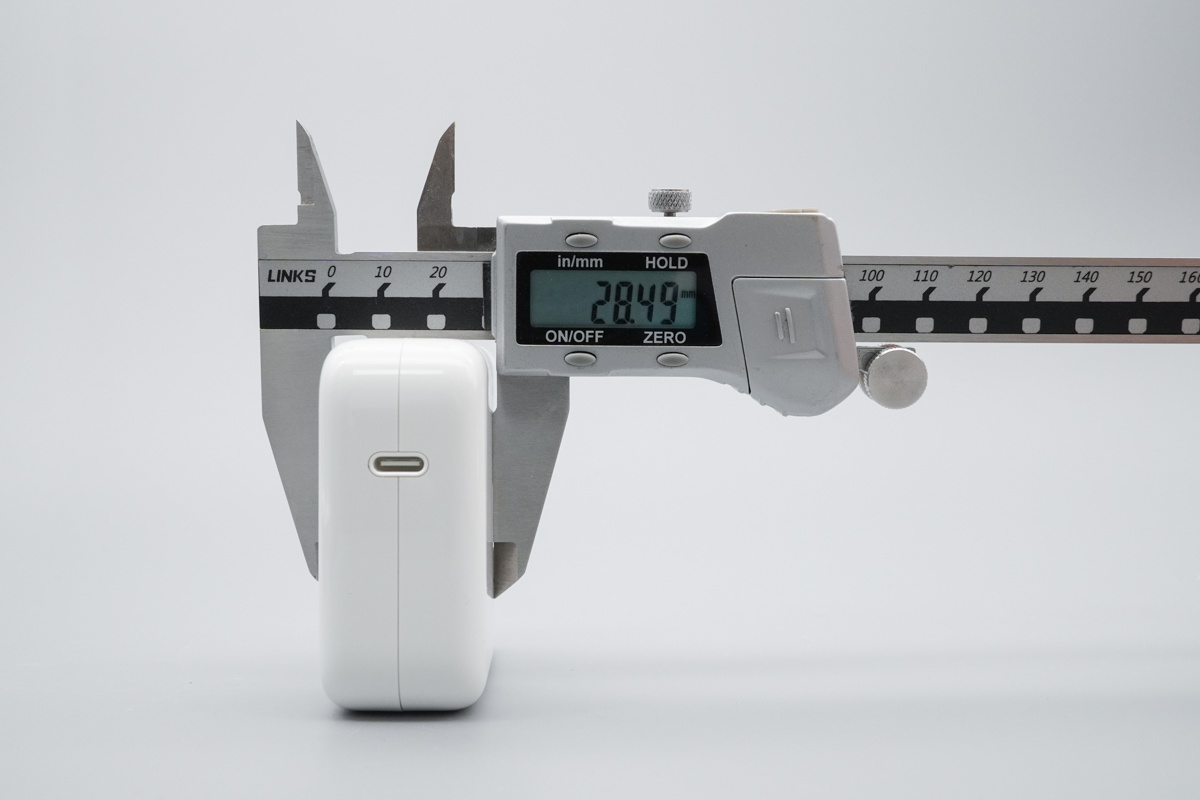
Measured dimensions are 64.98 × 64.91 × 28.49 mm, giving a volume of about 120.17 cm³ and a power density of roughly 0.58 W/cm³.
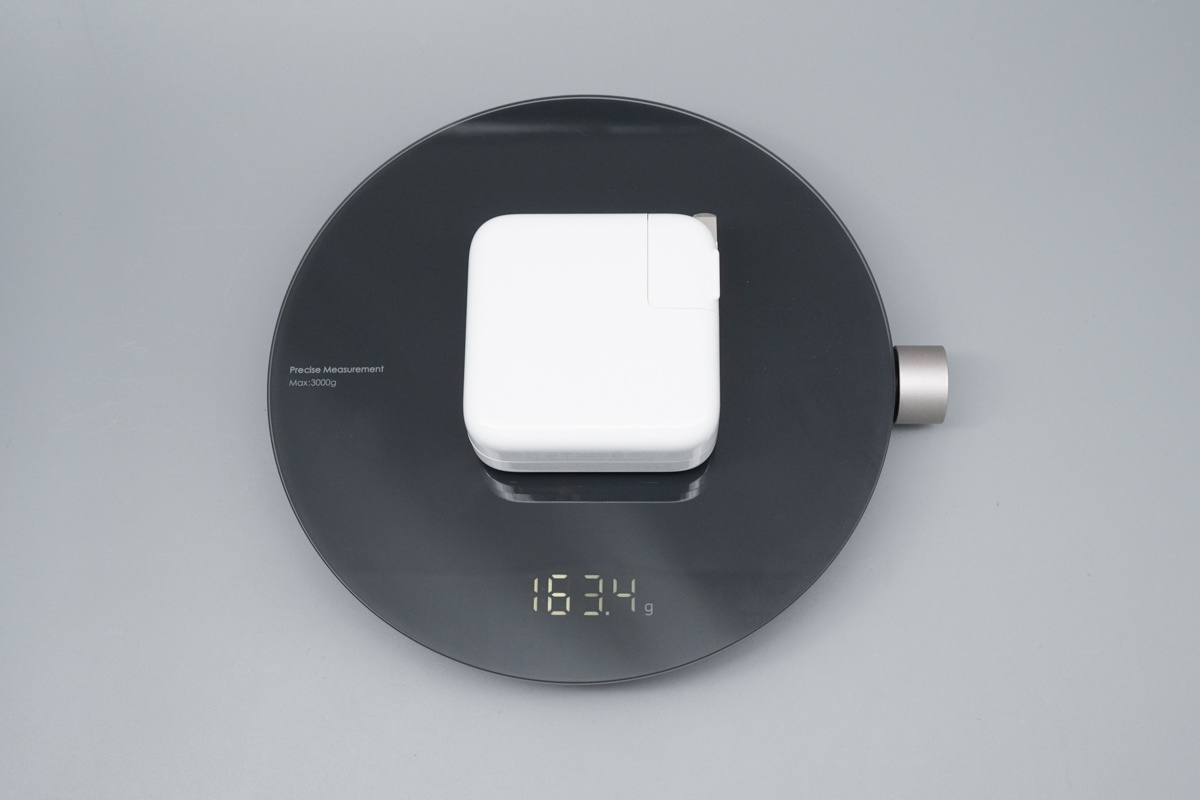
Weight is 163.4g, which is compact for a 70W adapter.
AC Connector 2: A Non-Backward-Compatible Interface Change
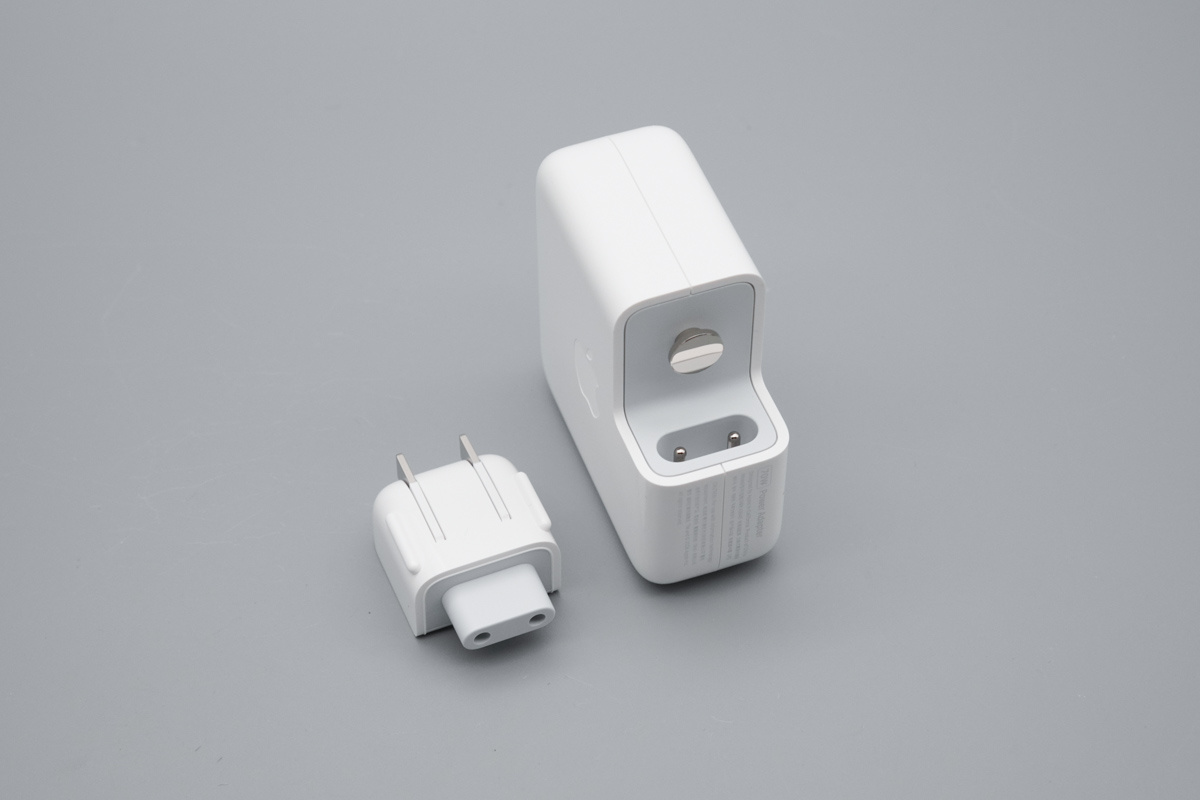
The most visible physical change is the power interface. The new adapter uses AC Connector 2, an oval interface without the old groove.
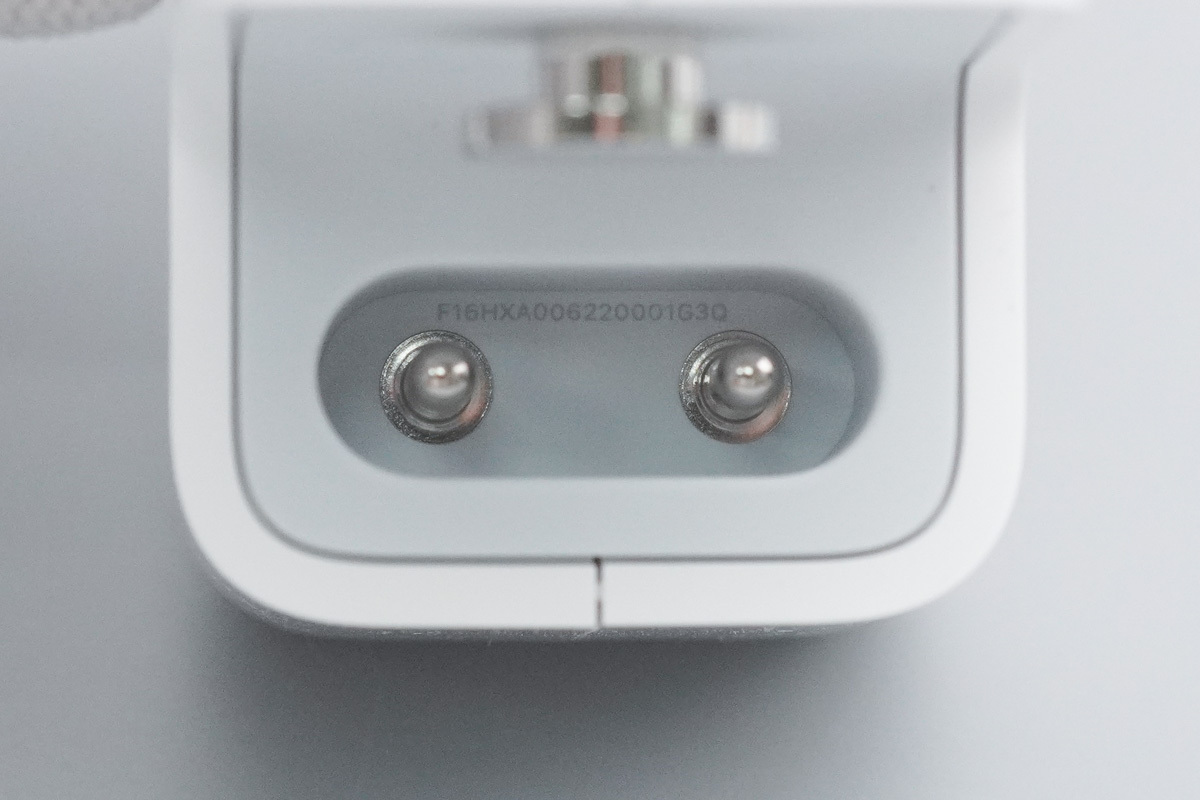
This is not backward compatible: older extension cables cannot be used with the A3543. Users who need an extension cable must choose an AC Connector 2 version or a compatible travel adapter kit.
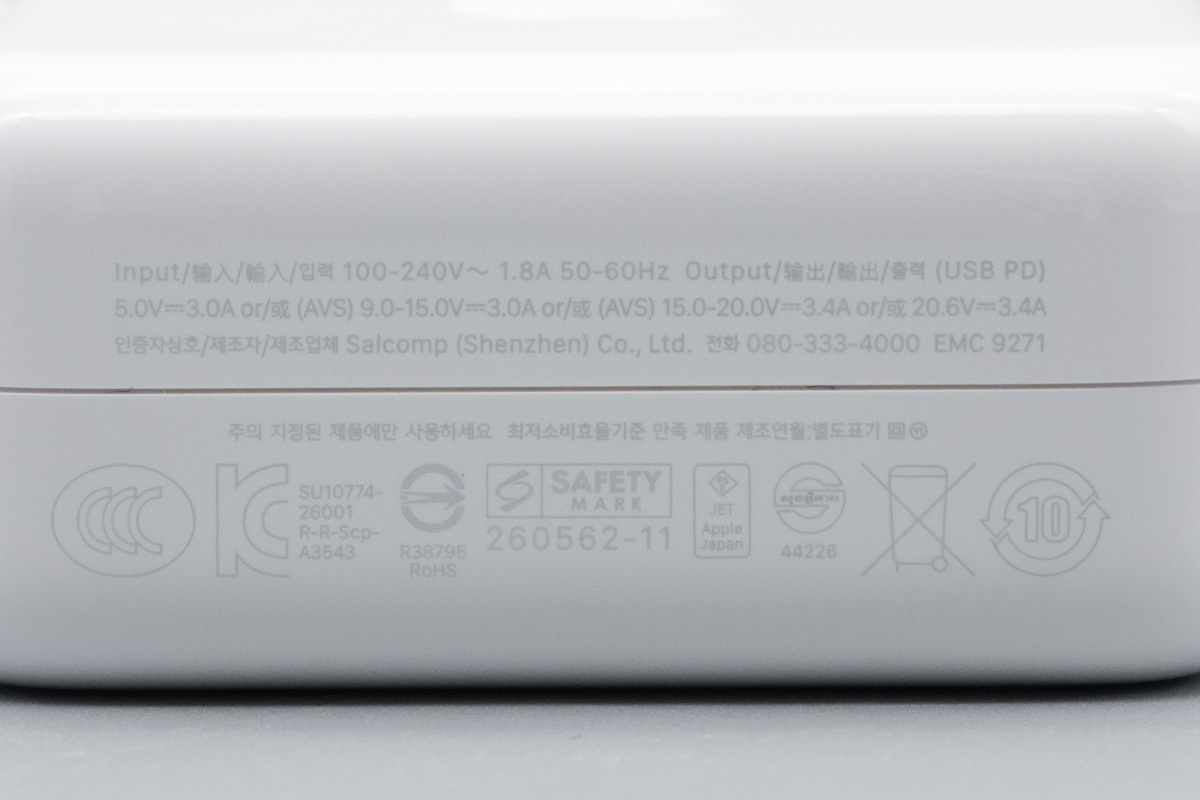
The input rating is 100–240V~ 1.8A, 50–60Hz.
USB PD output is listed as 5.0V 3.0A, AVS 9.0–15.0V 3.0A, AVS 15.0–20.0V 3.4A, and 20.6V 3.4A.
The manufacturer is Salcomp (Shenzhen) Co., Ltd.
This interface change is a clear generational break, so accessory compatibility deserves attention before purchase.
Firmware and Protocol: PD3.2 AVS Is the Core Upgrade
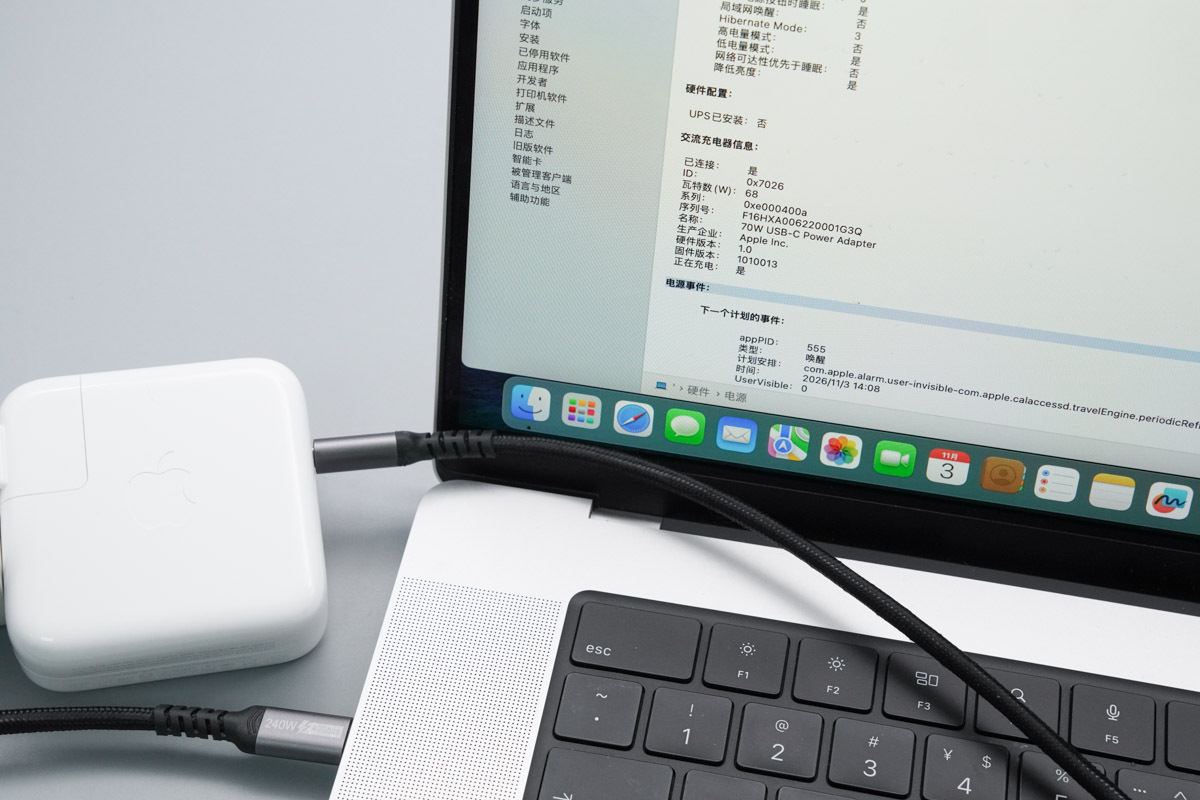
Connected to a MacBook, the adapter reports
ID 0x7026,
wattage 68W,
series 0xe000400a,
serial number F16HXA006220001G3Q,
name 70W USB-C Power Adapter,
manufacturer Apple Inc., hardware version 1.0,
and firmware version 1010013.
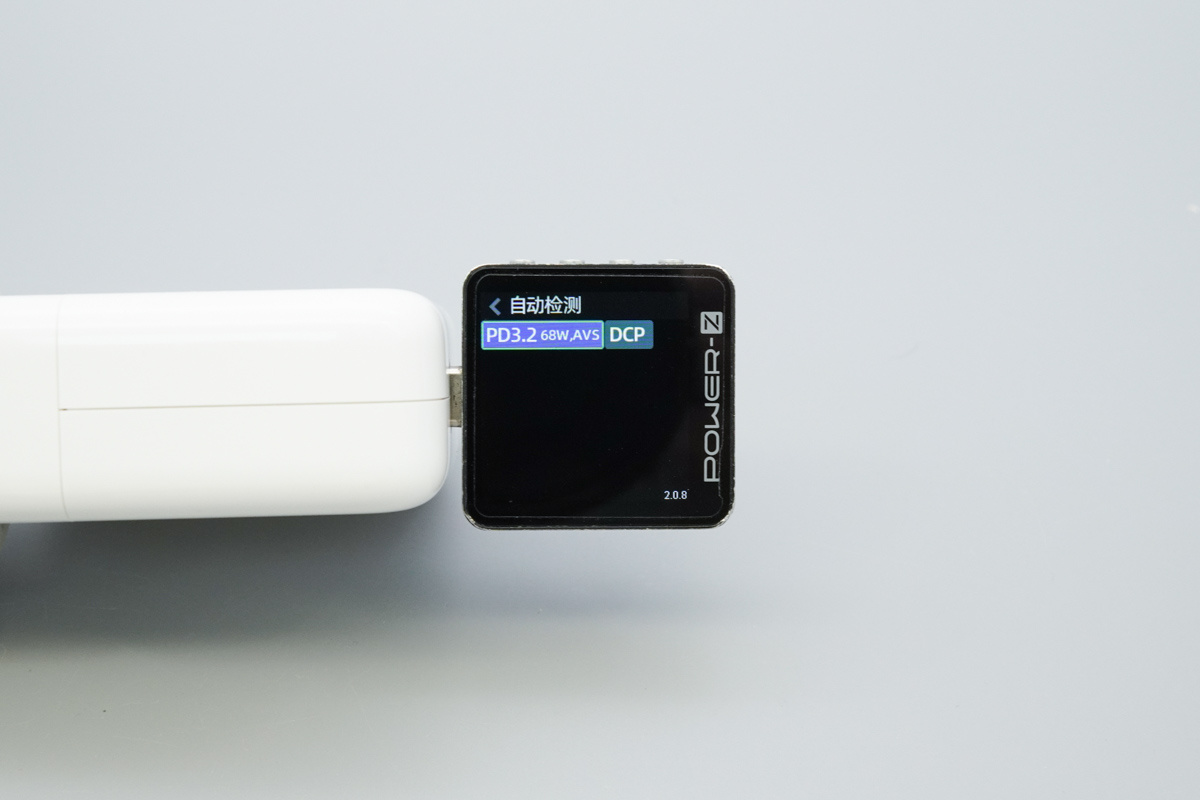
Using a POWER-Z KM003C, the adapter supports PD3.2, AVS, and DCP. The PDO report includes four fixed voltage steps—5V/3A, 9V/3A, 15V/3A, and 20V/3.4A—plus one 9–20V AVS range at 3A/3.4A.
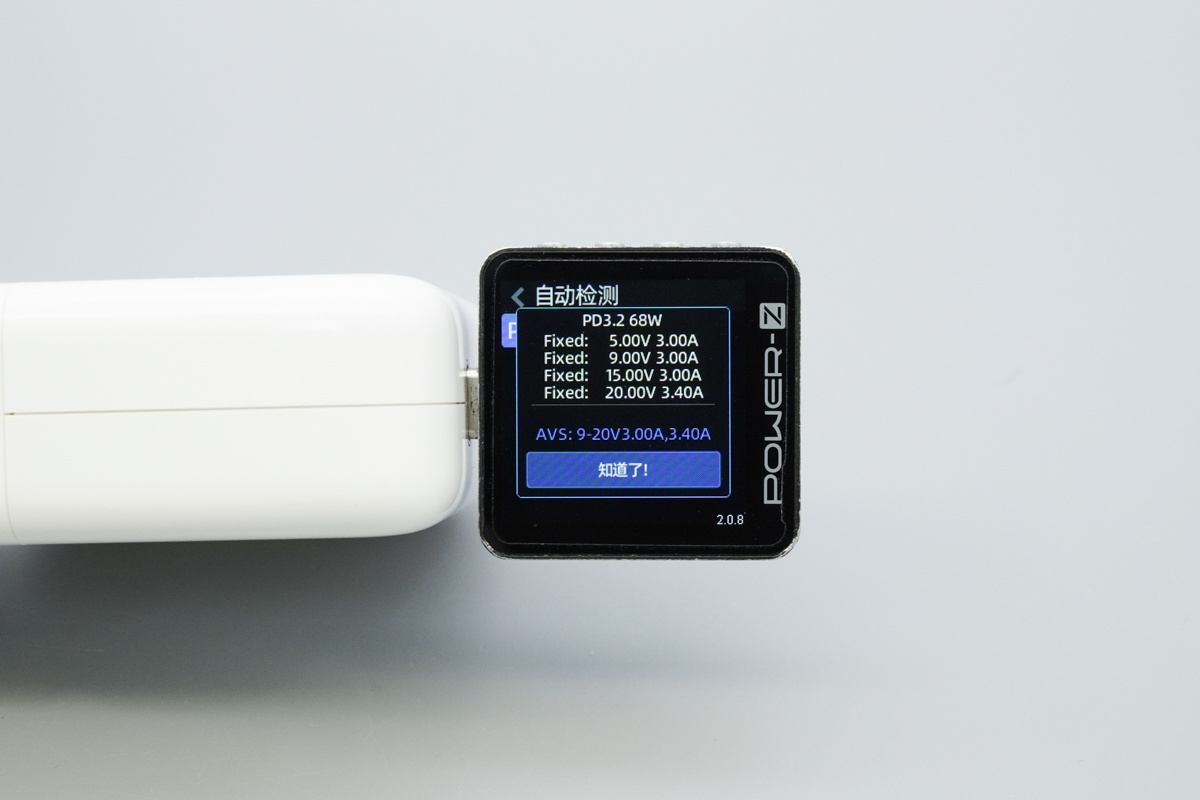
This AVS support is the real functional upgrade. It allows the charger and device to adjust voltage in 100mV steps, rather than relying only on fixed PD voltage steps.
AVS Explained: From EPR AVS to SPR AVS
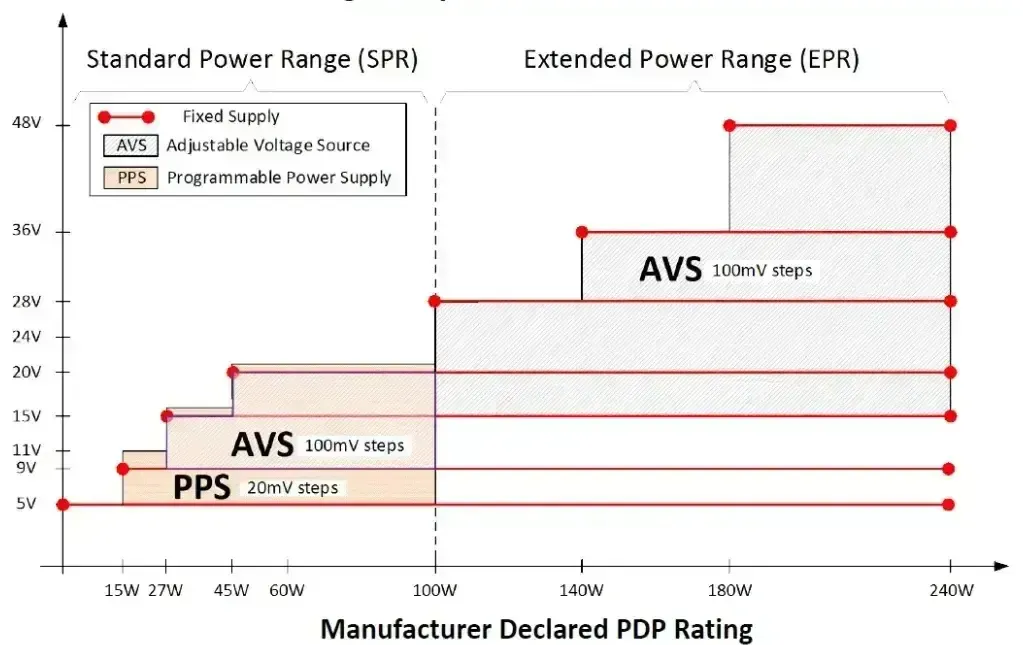
USB-IF introduced EPR AVS in the USB PD 3.1 specification in 2021. EPR AVS applies to the extended power range above 100W and allows adjustable output from 15V to 48V in 100mV steps. Unlike PPS, EPR AVS provides constant adjustable voltage and does not support current limiting.
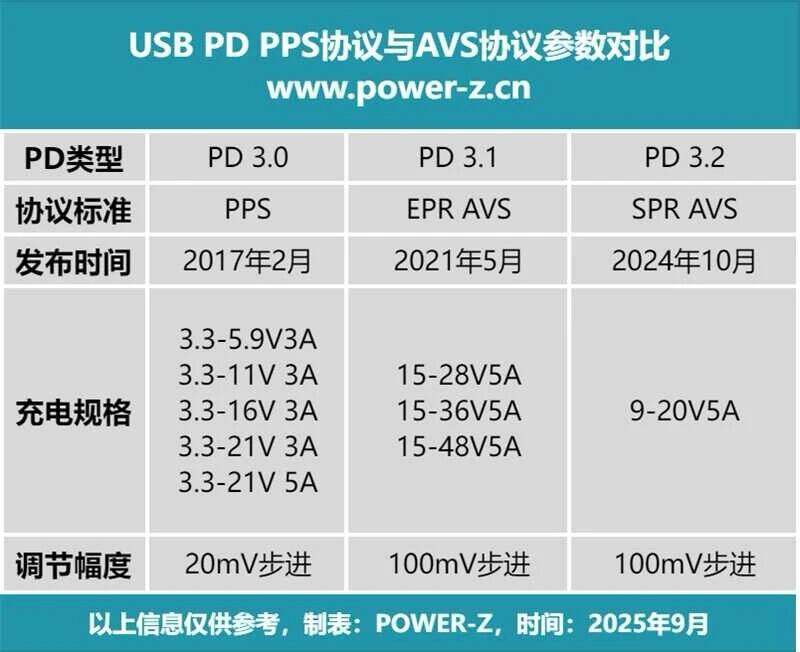
In October 2024, USB PD 3.2 added SPR AVS, or Standard Power Range Adjustable Voltage Supply. The new specification requires SPR AVS support for devices with a nominal power above 27W. In the 27W–100W range, SPR AVS allows adjustable output from 9V to 20V in 100mV steps. In simple terms, PD3.1 AVS was mainly for high-voltage EPR operation, while PD3.2 SPR AVS brings adjustable voltage to mainstream medium- and low-power charging. The A3543’s AVS range is exactly this SPR AVS mode, and it is why the adapter can better match the battery-management needs of newer Apple devices.
iPhone Compatibility: AVS Unlocks Higher Fast-Charge Power
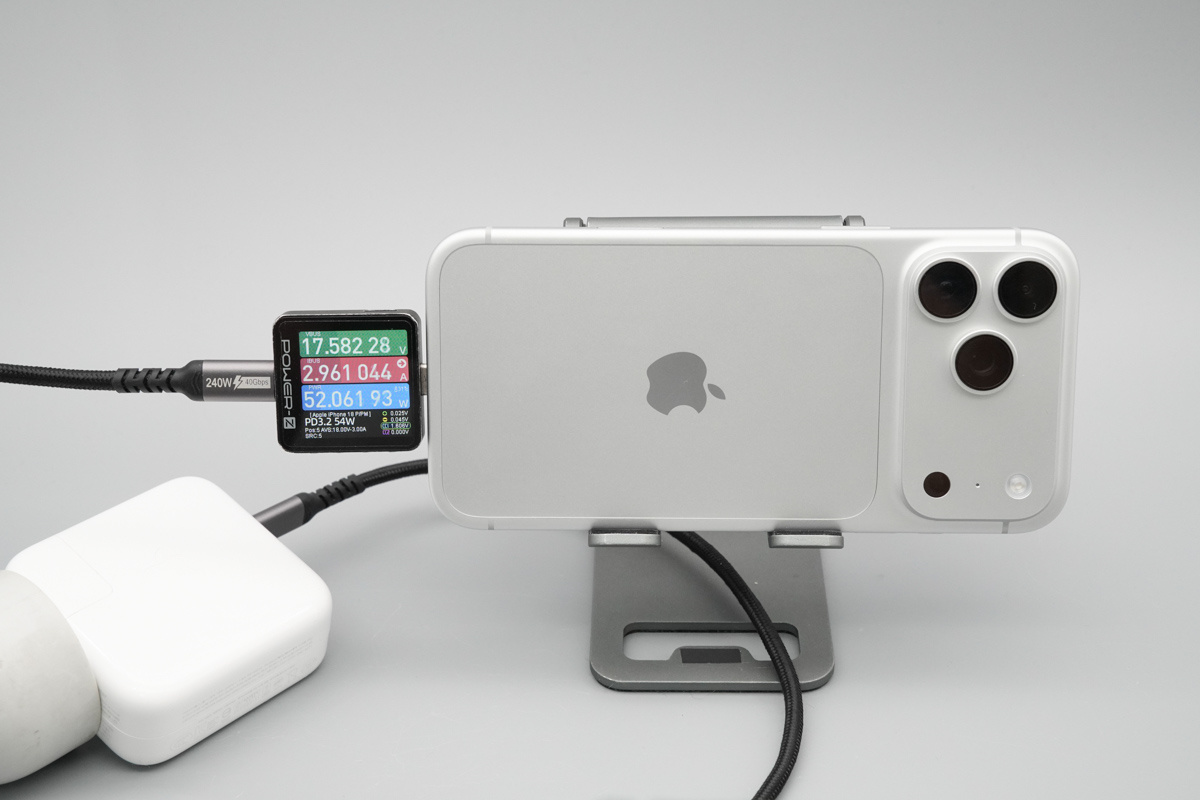
For iPhone 18 Pro Max, the A3543 negotiated 17.58V/2.96A, 52.06W and entered AVS mode.
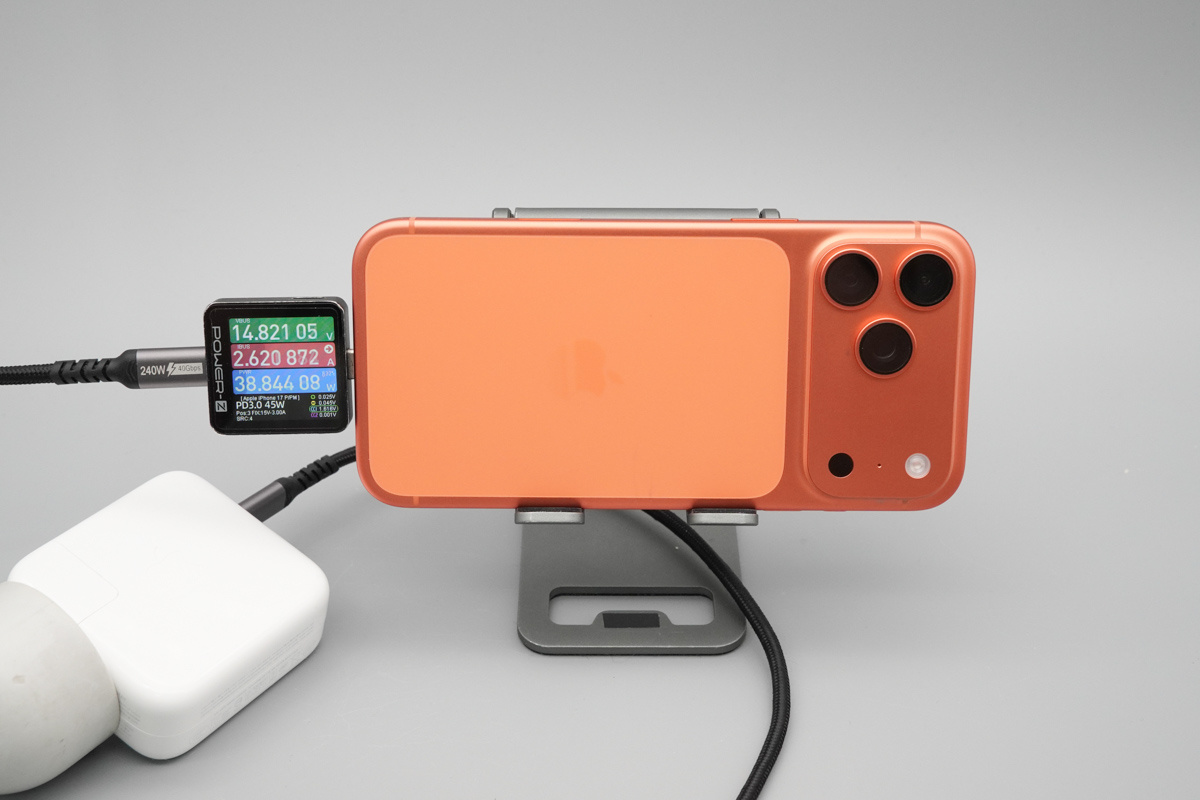
For comparison, an iPhone 17 Pro Max negotiated 14.82V/2.62A, 38.84W and used standard PD. This difference shows the practical value of AVS: without the AVS handshake, the higher 50W-class charging level is not triggered.
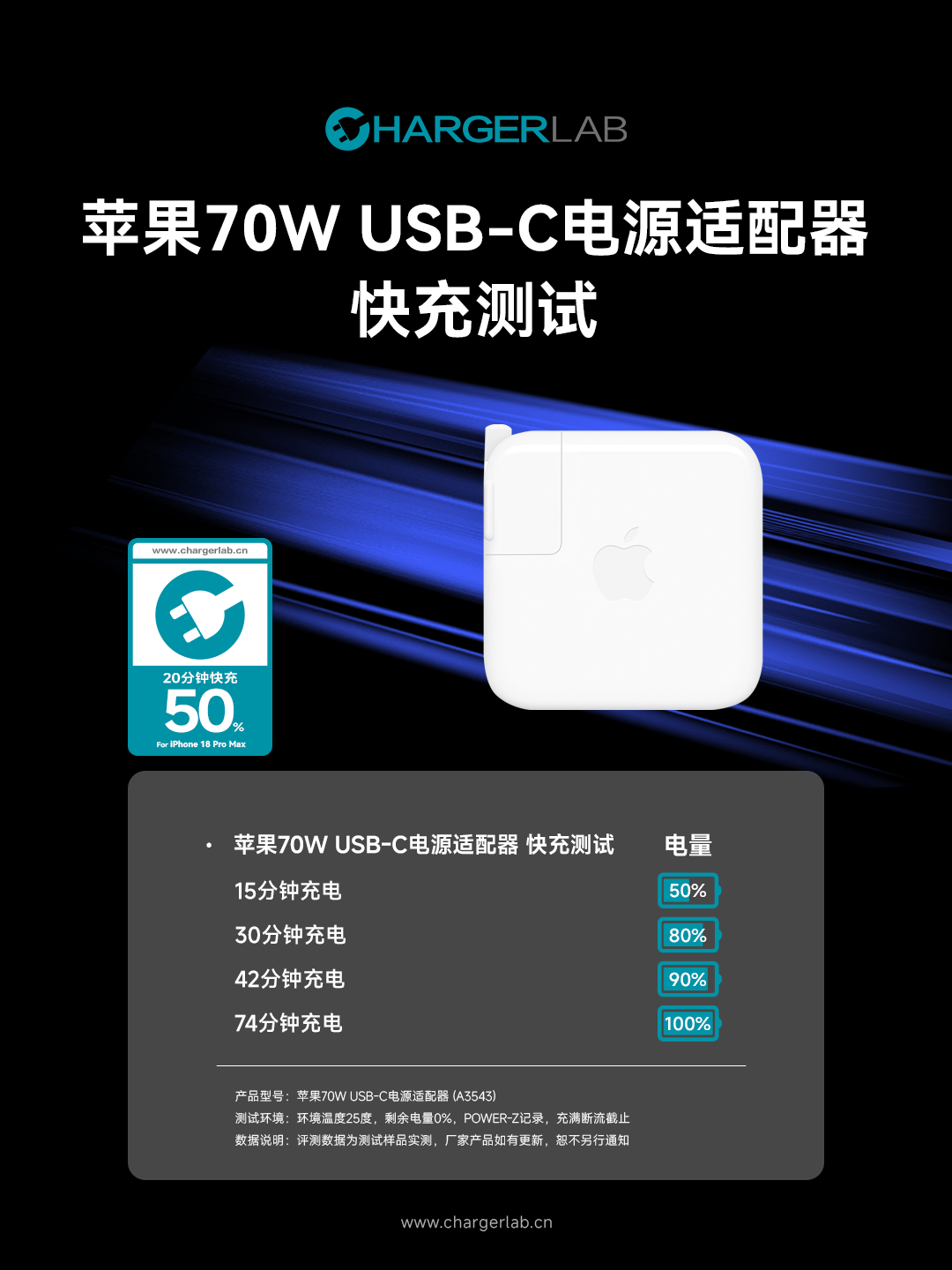
In a full charging run, the iPhone 18 Pro Max reached 50% in 15 minutes and 100% in 74 minutes. That short-term charging speed passes a 15-minute-to-50% fast-charge benchmark. The charging curve follows Apple’s usual battery-protection logic: high power initially, then a controlled reduction as battery temperature and state of charge rise. Full-load temperature rise remained controllable in testing.
MacBook and Other Devices: Strong for Apple, Adequate for Others
With a MacBook Pro 16 (M4 Pro), the adapter delivered 20.14V/3.36A, 67.74W at the notebook input, close to its rated 70W class. The charging run started at the 20V level, held a 66.1W high-power phase until about the 67th minute, then gradually reduced power. Full charge took 2 hours 4 minutes.
Compatibility with non-Apple devices is usable but not exceptional. A vivo X300 Ultra negotiated PD at about 15.47W. The A3543 is clearly optimized for Apple’s ecosystem, especially iPhone 18 Pro and iPhone Duo, while still providing standard PD support for other USB-C devices.
Efficiency: High Conversion Efficiency Across Most Fixed Steps
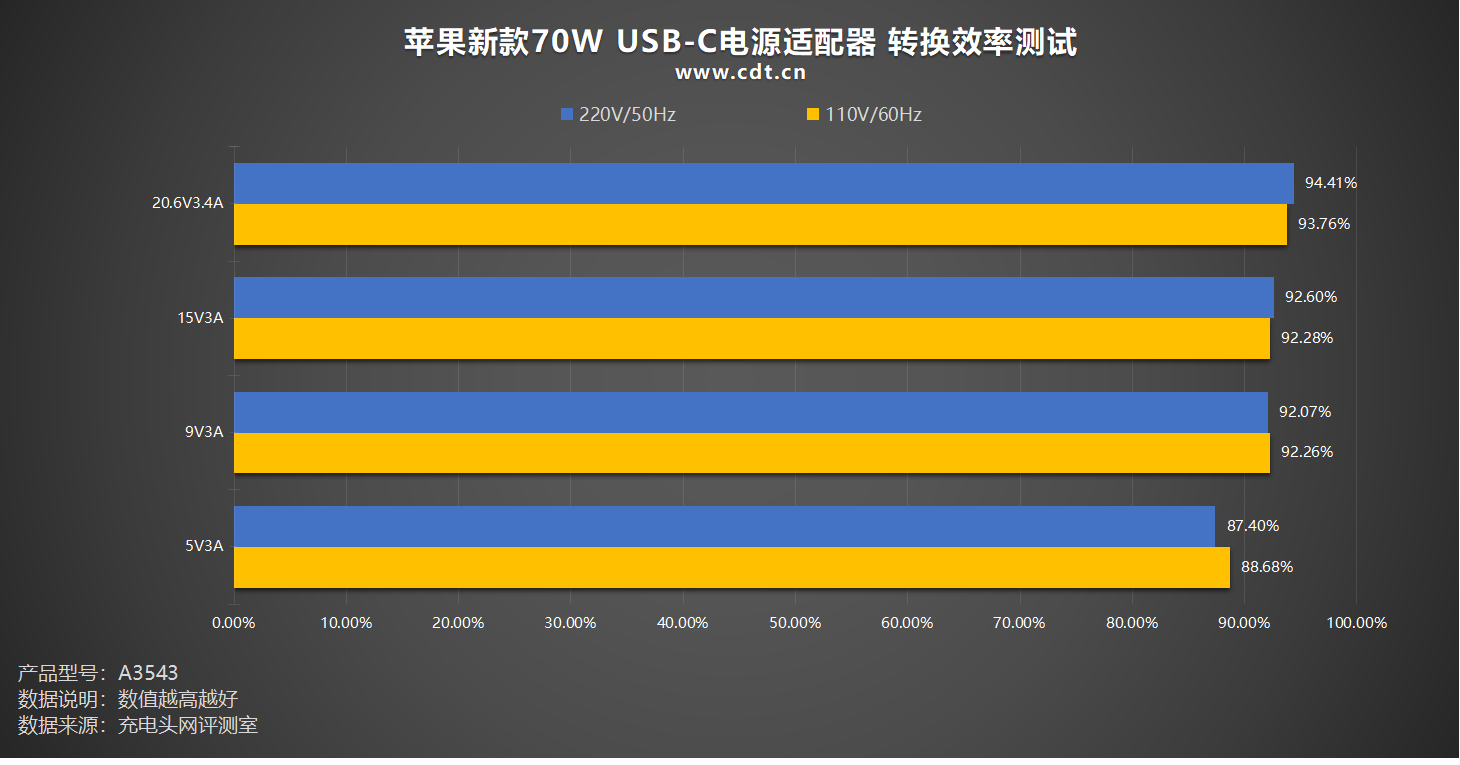
At 220V/50Hz, overall conversion efficiency ranged from 87.40% to 94.41%. The highest efficiency was 94.41% at 20.6V/3.4A; the lowest was 87.40% at 5V/3A. At 110V/60Hz, efficiency ranged from 88.68% to 93.76%, with the same 20.6V/3.4A step reaching the top figure of 93.76% and 5V/3A the lowest at 88.68%.
Overall, three of the four fixed-voltage steps exceed 92% efficiency. This is an excellent result and reflects Apple’s usual emphasis on stable, high-quality power conversion rather than only peak wattage claims.
Standby Power and Ripple: Clean Output, Very Low Idle Draw
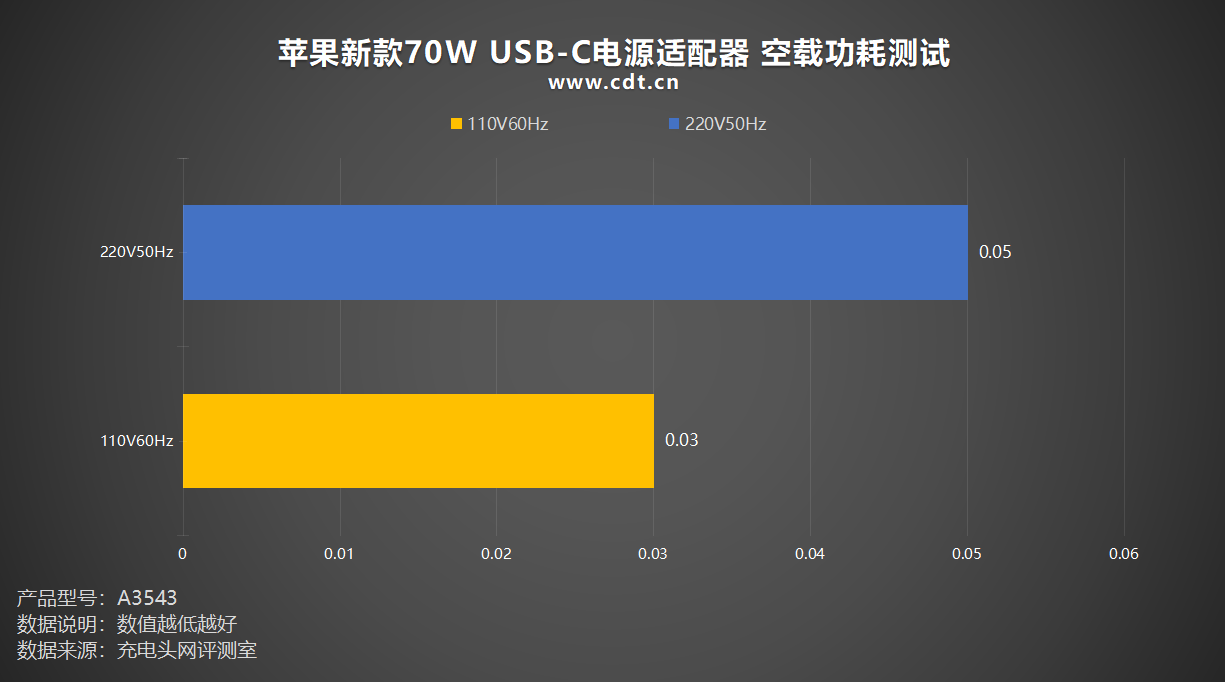
No-load power consumption is extremely low. At 220V/50Hz, it measured 0.05W, equivalent to about 0.438 kWh per year, or roughly 0.26 yuan per year at 0.6 yuan/kWh. At 110V/60Hz, it measured 0.03W, about 0.263 kWh per year, or roughly 0.16 yuan per year.
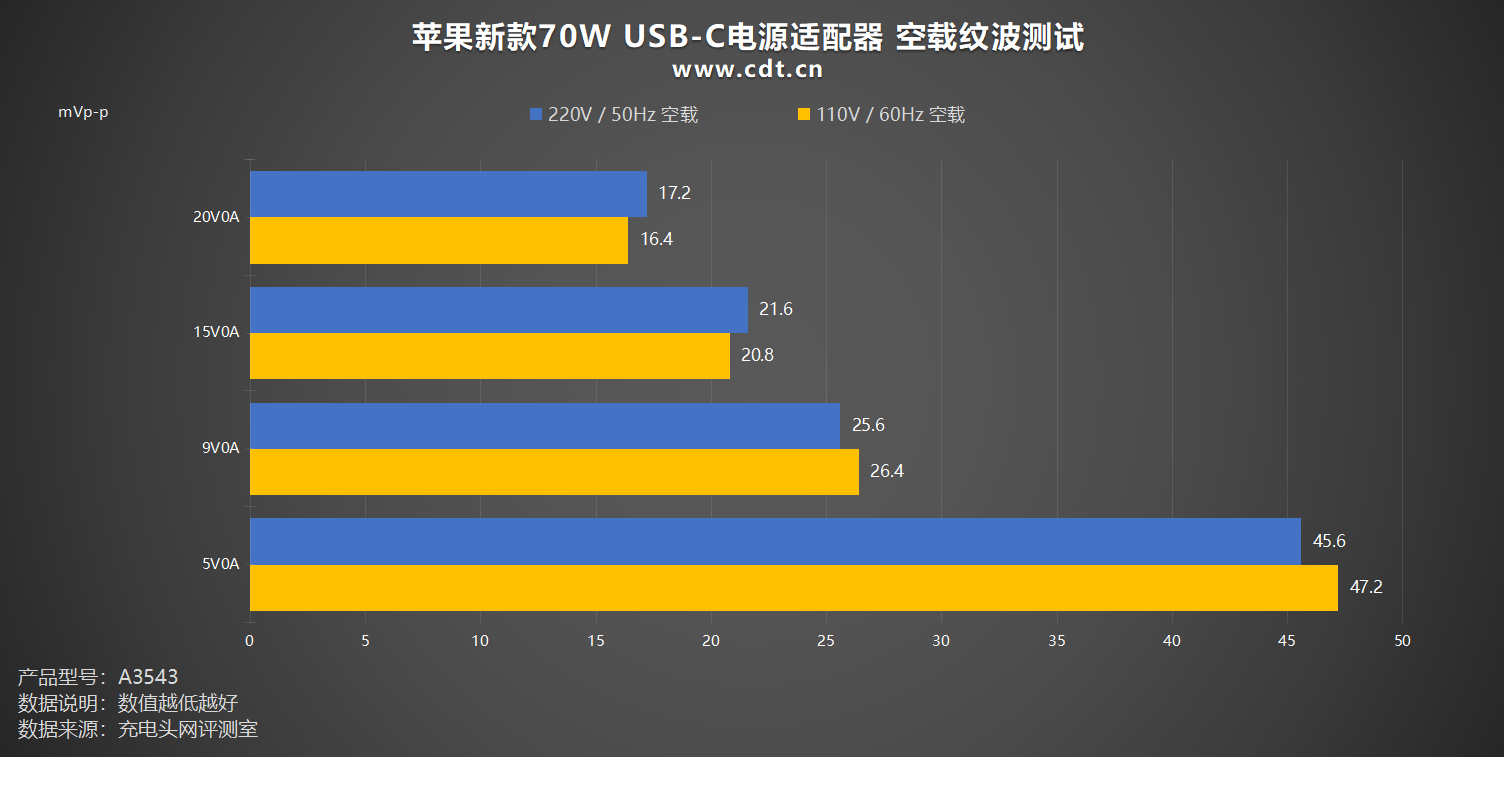
Ripple control is also strong. At 220V/50Hz no-load, ripple was 45.6mVp-p at 5V/0A, 25.6mVp-p at 9V/0A, 21.6mVp-p at 15V/0A, and 17.2mVp-p at 20V/0A. At 110V/60Hz no-load, the figures were 47.2mVp-p, 26.4mVp-p, 20.8mVp-p, and 16.4mVp-p respectively. Under load at 220V/50Hz, the highest ripple was 42.4mVp-p at 20.6V/3.4A, and the lowest was 25.6mVp-p at 5V/3A. At 110V/60Hz, the highest was 43.2mVp-p and the lowest was 27.6mVp-p at 5V/3A. Results at 110V and 220V are close, indicating stable output across different mains environments.
Conclusion: A Pointed Upgrade for New Apple Devices
The Apple A3543 70W USB-C Power Adapter is a targeted upgrade rather than a universal must-buy. Its core value is PD3.2 SPR AVS, which fixes the previous adapter’s missing 18V AVS support and better serves iPhone 18 Pro series, iPhone Duo, and newer Apple devices. The AC Connector 2 interface and overmolded foldable prongs improve safety and modernize the physical design, but the new oval interface is not backward compatible with older extension cables.
Performance is consistent with Apple’s power-adapter standards: high conversion efficiency, very low standby power, clean ripple control, stable output at 110V and 220V, and reliable near-70W charging for MacBook Pro M4 Pro. For iPhone 18 Pro, iPhone Duo, and newer MacBook users, the A3543 is a well-matched original fast-charging solution. Owners of the older 70W adapter who do not need 18V AVS have less reason to upgrade, but anyone buying new accessories should remember the AC Connector 2 compatibility requirement.
 UGREEN 300W 8-Port Desktop Charger Review: 6C + 1A + DC Smart Power Hub